Home Blog Page 19

Cambodia to Host Joint Border Committee Meeting with Thailand in Phnom Penh on June 14

The Cambodian government has agreed to a proposal from Thailand to host the next meeting of the Joint Boundary Commission, or JBC, between the two countries. The meeting is scheduled to take place in the capital Phnom Penh on June 14, 2025, as the two sides continue efforts to resolve longstanding border disputes.

According to Fresh News, a pro-government outlet in Cambodia, foreign ministry spokesperson Chum Sounry confirmed that preparations are under way for the JBC meeting, which will focus on technical issues related to land border demarcation.

The spokesperson noted that Cambodia has officially informed its Thai counterpart of the meeting and reiterated the country’s position to settle border issues through peaceful means, using technical mechanisms and international law as guiding principles.

Officials said Cambodia remains firmly committed to protecting its sovereignty and territorial integrity. At the same time, the country aims to transform border areas into zones of peace, friendship, cooperation and development, to benefit both nations and their people.

Speaking at a joint session of the National Assembly and Senate on June 2, Prime Minister Hun Manet instructed Cambodian officials to urgently convene the JBC meeting with Thailand in order to push forward with border demarcation efforts and resolve outstanding territorial concerns.

The Prime Minister also revealed that Cambodia is preparing an agenda for the JBC meeting that includes the potential submission of disputes over Ta Moan Thom, Ta Moan Toch, Ta Krabei temples, and the Mom Bei area to the International Court of Justice.

Mr. Man Nat, chairman of the Cambodia Watchdog Council, told The Cambodia Daily that holding the JBC meeting is an appropriate step toward maintaining stability along the border and preventing further tensions. However, he emphasized that the commission does not have the authority to make final legal rulings on territorial disputes if Cambodia proceeds with a case at the International Court of Justice.

He added that alongside any legal proceedings against Thailand at the ICJ, Cambodia should also seek parliamentary approval to ratify the United Nations Convention on the Law of the Sea, or UNCLOS. This would pave the way for further legal action over overlapping maritime claims and the disputed island of Koh Kood.

Mr. Man Nat concluded by suggesting that Cambodia should consider escalating the dispute, step by step, to the Permanent Court of Arbitration, describing it as a competent international forum for resolving sovereignty-related conflicts between states.

Cambodian Ruling Party Leader Urges Vietnam to Speed Up Border Demarcation

The President of Cambodia’s Senate and ruling Cambodian People’s Party, Mr. Hun Sen, has called on Vietnam to accelerate the completion of the countries’ remaining land border demarcation.

Speaking on June 4 during a meeting in Phnom Penh with Vietnam’s Deputy Minister of National Defence, Mr. Nguyen Tan Cuong, Mr. Hun Sen urged both governments to reach a swift agreement on the outstanding 16 percent of the shared land boundary.

The meeting took place during a three-day official visit to Cambodia by the senior Vietnamese military official.

Mr. Hun Sen said Cambodia and Vietnam’s bilateral relationship remains strong and deeply rooted in traditional friendship, solidarity, good neighborliness and broad cooperation, particularly between the two countries’ armed forces.

He also confirmed that he will personally attend Vietnam’s upcoming 50th anniversary celebrations marking the liberation of the country’s southern region. The visit, he said, will also commemorate the 48th anniversary of his 1977 journey to Vietnam to seek assistance in overthrowing the Khmer Rouge regime.

During the meeting, Mr. Nguyen Tan Cuong reaffirmed Vietnam’s commitment to building a Cambodia-Vietnam Friendship Monument at the National Museum of Vietnam. He said the monument is intended to highlight to both national and international audiences the historic and ongoing closeness between the two nations, especially in military cooperation. He referred to the joint efforts of Cambodia and Vietnam during past struggles against colonial regimes.

The Vietnamese delegation’s visit runs from June 3 to June 6 and includes meetings with Royal Cambodian Armed Forces Commander Vong Pisen, Prime Minister Hun Manet and Senate President Hun Sen.

Meanwhile, opposition figure and former Cambodia National Rescue Party lawmaker Um Sam An criticised the push to finalise the border without involving the International Court of Justice. Speaking to The Cambodia Daily, he claimed such action would amount to further loss of Cambodian territory to Vietnam.

He urged Prime Minister Hun Manet to submit a request to the National Assembly to ratify the United Nations Convention on the Law of the Sea, and to review the 84 percent of the border that has already been demarcated. He argued that previous demarcation agreements have resulted in Cambodia losing land to Vietnam entirely.

Hun Sen to Allocate Daughter’s Land for Dormitory to Support Underprivileged Female Students in Phnom Penh

0

Cambodia’s Senate President and ruling party leader Hun Sen has announced plans to build a dormitory in Phnom Penh for female students from low income families. The facility will be constructed on two hectares of land owned by his daughter Mrs. Hun Mana.

Speaking on 4 June 2025 to members of Cambodia’s National Council for Women, Mr. Hun Sen said the land, valued at over 10 million US dollars and originally purchased for the construction of Bayon Television’s facilities in Chroy Changvar, will instead be handed over to the Ministry of Women’s Affairs for the development of the new student housing project.

The proposed dormitory is expected to accommodate up to 500 female students from rural provinces who travel to the capital to continue their education. The plan includes 120 rooms, with each room designed to house four students. Each unit will feature a private bathroom and kitchen space.

The facility will also include a ground floor health centre, providing examination rooms and on site accommodation for medical staff.

Mr. Hun Sen expressed hope that the project will help ease the burdens faced by young women pursuing education far from home and contribute to the broader goal of empowering women and increasing their participation in national development.

The initiative has received support from Mr. Soeng Senkaruna, a representative of the Australia based Cambodian Democracy Organisation. He welcomed the plan as a meaningful step toward reducing the risks and challenges faced by female students who leave their hometowns to study in distant cities. He added that such support could play an important role in encouraging girls to remain in school.

Mr. Soeng Senkaruna also called for the initiative to be implemented effectively and with proper oversight by relevant officials and institutions.

In February 2023, during the National Council for Women’s annual meeting, Mr Hun Sen appealed to donors to support the construction of dormitories for female students in both the capital and the provinces. His goal, he said, was to increase access to secondary education for girls in rural areas by providing not only school opportunities but also secure places to live. He said this would help close the education gap between urban and rural communities.

US Chamber of Commerce: America Prioritises Aid to Cambodia While China Focuses on Loans

The head of the American Chamber of Commerce in Cambodia, Casey Barnett, says that while both the United States and China provide financial support to Cambodia, their approaches differ significantly. Washington prioritises grants, while Beijing focuses more on loans.

Writing on his personal Facebook page, Mr Barnett noted that the United States has provided Cambodia with both grants and loans since the 1990s. However, he emphasised that the majority of American assistance has come in the form of donations. While some earlier loans remain outstanding, aid from the US has largely been non-repayable.

In contrast, Mr Barnett said Chinese aid to Cambodia, particularly since the year 2000, has primarily consisted of loans. More recently, Beijing has included an increasing number of grants and equity investments. He suggested this may reflect a shift in China’s approach, potentially aimed at limiting Cambodia’s debt burden.

According to Barnett, Chinese assistance has also included money, weapons, clothing, and engineering support.

A new report released today by the American Chamber of Commerce in Cambodia states that between 1990 and 2024, the United States provided Cambodia with over 4.5 billion US dollars in aid. In 2024 alone, American assistance totalled around 55 million dollars.

Over the same period, China is reported to have provided more than 11.8 billion dollars in aid to Cambodia, with the majority classified as concessional loans.

Figures from Cambodia’s Ministry of Economy and Finance show that by the fourth quarter of 2024, the country’s total external debt stood at over 4 billion dollars. Loans from China accounted for roughly 34 percent of that sum. This makes China Cambodia’s largest bilateral creditor.

Since the signing of the Paris Peace Agreements, Cambodia has received ongoing support from the United States to promote development in areas such as the economy, civil society, and democracy. US aid has supported sectors including agriculture, the environment, food security, public health, and education.

Beyond financial assistance, the United States has also offered Cambodia significant access to export markets. Cambodian exports to the US currently total close to 10 billion dollars per year. In addition, Cambodia has benefited from trade privileges under the Generalized System of Preferences, known as GSP.

Cambodian Government Denies US Report Alleging State-Linked Transnational Crime

Cambodia’s Ministry of Interior has strongly rejected a report by a US-based think tank accusing the Cambodian government of involvement in transnational criminal activity that poses a threat to global security.

In a statement issued on June 2, the ministry’s spokesperson described the report by the United States Institute of Peace as an attack on the Cambodian government. The report, published on May 16, alleged that senior government officials in the region, including Cambodia, are entangled in criminal networks that have grown increasingly powerful and difficult to dismantle.

The ministry defended its record, stating that Cambodia is working closely with international partners to combat online crime, human trafficking and money laundering. Authorities are also reviewing and amending laws to strengthen legal tools aimed at preventing and suppressing criminal activity.

The spokesperson further claimed that Interior Minister Sar Sokha and his family have no shares, ownership stakes or financial interests in Jinbei Casino, responding to allegations mentioned in the US report.

Titled Policies and Patterns: State-Abetted Transnational Crime in Cambodia as a Global Security Threat, the report detailed how criminal networks, often intertwined with state officials, have become deeply entrenched and increasingly sophisticated. Based on interviews with nearly 100 sources including diplomats, journalists, business people and researchers, the report pointed to Cambodia as a key hub for transnational criminal operations.

The United States has previously taken action in connection with these concerns. In September 2024, Washington imposed sanctions on ruling party senator Ly Yong Phat and several of his business entities, citing their alleged involvement in human trafficking, money laundering, forced labor and online scams.

The Cambodian government maintains that such reports are unfounded and politically motivated. However, the allegations continue to draw international scrutiny, with growing calls for transparency and accountability in the region.

Opposition Lawmaker Urges National Unity Amid Tensions with Thailand

A senior figure from Cambodia’s opposition has called on citizens and politicians across the political spectrum to unite in the face of what he described as territorial encroachment by Thailand.

Speaking during a televised appearance on Idea Talk, hosted by The Cambodia Daily on the night of June 2, Um Sam An, a member of the dissolved Cambodia National Rescue Party (CNRP), urged all Cambodians to put aside domestic political divisions to focus on defending national sovereignty.

He made a particular appeal for solidarity in light of recent tensions with Thailand, which he accused of violating Cambodian territory.

Um Sam An also called on Prime Minister Hun Sen to release all political prisoners, arguing that doing so would help restore democracy and human rights in the country. He said those imprisoned for political reasons are “Khmer at heart” and had acted out of a desire to protect Cambodia from foreign threats.

The opposition figure expressed skepticism over the current government’s commitment to pursuing legal action against Thailand. He questioned whether Cambodia would follow through with its pledge to bring the border dispute before the International Court of Justice if there were negotiations between former Thai Prime Minister Thaksin Shinawatra and Cambodian political leader Hun Sen. The two men are known to have close ties.

Um Sam An warned that failure to take the matter to the international court, and instead continuing bilateral talks under Thai pressure, would disadvantage Cambodia. He claimed Thailand prefers two-party negotiations or even the threat of armed conflict, believing that such approaches would favor its position in the ongoing border dispute.

His remarks came just hours before Cambodia’s National Assembly and Senate unanimously approved a government proposal to file a case against Thailand at the International Court of Justice over contested border areas.

Prime Minister Hun Manet confirmed that Cambodia will proceed with the lawsuit regardless of whether Thailand agrees to participate. The case will focus on three key sites: the area surrounding Moum Bei, the Ta Moan Thom and Ta Moan Toch temples, and the Ta Krabey temple complex.

Khmer Krom Federation Urges Peaceful Advocacy for Rights and Identity

The Khmer Kampuchea Krom Federation has called on ethnic Khmer communities in Vietnam to exercise their fundamental freedoms in a peaceful effort to end what it describes as decades of Vietnamese colonial rule and to build a future rooted in freedom, justice, and self-determination.

In a statement issued today, the Federation announced that it will mark what it calls the “76th Anniversary of Kampuchea Krom under Vietnamese Colonialism” with a commemoration on Wednesday. The event is scheduled to take place at the Federation’s human rights and development center in Phnom Penh’s Sen Sok district.

According to the statement, the ceremony aims to recall what the group describes as historical injustice, referring to the 1949 handover of Kampuchea Krom by French colonial authorities to the Vietnamese government under Emperor Bảo Đại. The Federation says this transfer occurred without consultation or consent from the Khmer population.

It claims that over the past 76 years, ethnic Khmers in the region have endured the erosion of their autonomy, identity, and basic rights. Allegations include systematic discrimination, suppression of cultural expression, and even attempts at ethnic erasure.

The group is appealing to the international community, especially member states of the United Nations, to pressure the Vietnamese government to immediately release detained Khmer Krom human rights defenders. They specifically cite six ethnic Khmer civil society leaders and six human rights activists reportedly imprisoned by Vietnamese authorities.

Yeang Sothearin, chairman of the Public Affairs Committee of the Khmer Krom Youth Committee, told The Cambodia Daily that the commemoration represents not only historical remembrance but also ongoing suffering among Khmer families who, in his words, continue to live under foreign domination.

He added that since 1975, when southern Vietnam came under communist rule, Khmer Krom communities have faced severe repression including arbitrary detention, extrajudicial killings, torture, and restrictions on religious freedom, language education, and historical study.

On June 04, 1949, the French National Assembly approved the transfer of Cochinchina, also known to many Khmers as Kampuchea Krom, to Vietnamese administration, despite Cambodia’s status at the time as a French protectorate. The decision, made without royal assent, involved 21 provinces, 2 islands, and 1 deep-sea port, covering nearly 67,700 square kilometers, roughly half the area of present-day Cambodia.

Since then, all of those former Khmer provinces have been renamed in Vietnamese.

Cambodian Parliament Backs Government Plan to Bring Border Dispute with Thailand to International Court

In Phnom Penh, Cambodia’s National Assembly and Senate have unanimously approved a government proposal to take a border dispute with Thailand to the International Court of Justice.

The joint session, held on June 02, 2025, saw all 182 lawmakers in attendance voting in support of Prime Minister Hun Manet’s plan to pursue legal action over contested areas along the Cambodian-Thai border.

Speaking at the session, Prime Minister Hun Manet said that while Thailand has not agreed to submit the case to the court, Cambodia will proceed regardless. The government intends to file claims regarding three key sites: the Moum Bey area, and the temples of Ta Moan Thom, Ta Moan Touch, and Ta Krabey.

Hun Manet stated that the aim of the legal move is to resolve the long-standing border issue once and for all. He emphasized that using an international legal mechanism would help prevent future conflict and reduce the risk of armed confrontation or exploitation by extremist groups.

The Prime Minister also said he had instructed Cambodia’s Joint Border Committee to urgently arrange talks with Thai counterparts, with the goal of resuming technical work on demarcation and the installation of border markers.

Hun Manet stressed that although Cambodia is committed to peaceful resolution through technical and legal means, the country retains the right to defend its territorial integrity. He warned that in the event of military encroachment by Thai forces, Cambodia would consider all options, including the use of armed force.

In a separate address during the session, Senate President Hun Sen echoed the government’s position. He said Cambodia has already lost significant amounts of territory throughout its history, and now seeks only to defend the land it currently holds. Hun Sen made clear that Cambodia is not seeking foreign territory, nor is it attempting to reclaim lands lost in the past, but it will not allow further encroachment.

Tensions escalated recently when Cambodian and Thai troops clashed on May 28 near the Moum Bey area. The incident resulted in the death of one Cambodian soldier.

Responding to the incident on June 01, Thai military spokesman Winthai Suvari claimed that the contested area belongs to Thailand under international law. He rejected assertions by Hun Sen that the land falls within Cambodian territory.

Opposition figure Um Sam An of the Cambodia National Rescue Party commented on the matter via Facebook. He expressed support for Hun Manet’s decision, calling it a move that Cambodians across the political spectrum have long awaited.

Um Sam An urged the Prime Minister to expand Cambodia’s legal case to include other disputed areas such as Koh Kood, overlapping maritime zones, Koh Tral, the temples already mentioned, and the An Ses border pass. He also called for the government to formally accede to the United Nations Convention on the Law of the Sea.

Meanwhile, Man Nat, head of the Cambodian Watchdog Council, welcomed the government’s decision. He said the move aligns with the spirit of the 1991 Paris Peace Agreements, to which Thailand is a signatory, as well as the Franco-Siam treaties of 1904 and 1907. He added that multiple relevant international legal documents support Cambodia’s position.

Cambodia Sends Diplomatic Note to Thailand Over Soldier’s Death at Border

Cambodia has formally called on Thailand to conduct an immediate investigation and hold those responsible to account after a Cambodian soldier was shot and killed near the contentious Moum Bei area along the shared border in Preah Vihear province.

In a diplomatic note dated May 29 and made public on June 2, Cambodia’s Ministry of Foreign Affairs described the incident as an unlawful act of armed aggression by Thai military forces, which it claims occurred on Cambodian soil in Techo Morakot village, Choam Khsant district.

The Cambodian government stated that its border troops have maintained a continuous and peaceful presence in the area for many years, dating back to before the signing of the 2000 Memorandum of Understanding between the two nations concerning land boundary demarcation.

The ministry condemned the shooting as a violation of Cambodia’s sovereignty and territorial integrity, calling it contrary to the spirit of good neighbourliness and friendship outlined in the 2000 agreement.

According to the statement, the use of lethal force on May 28, resulted in the unjust killing of a Cambodian soldier and must be met with a thorough, urgent, and impartial investigation. It stressed that those responsible for what it termed a “brutal and unlawful act” must face legal consequences.

Prime Minister Hun Manet, speaking on June 3, said Cambodia would refer disputes over the Ta Moan Thom, Ta Moan Toch, and Ta Krabey temples, as well as the Moum Bei area, to the International Court of Justice regardless of whether Thailand agrees.

He argued that taking the issue to an international court would help bring clarity and resolution to longstanding border disputes and prevent further escalation, particularly by nationalist groups on either side of the border.

The border clash follows a high-level defence meeting between Cambodia’s Minister of National Defence, Tea Seiha, and his Thai counterpart, Sutin Klungsang, held in Bangkok on May 1, 2025.

Tensions remain high along parts of the Cambodian–Thai frontier, with at least three known flashpoints: the recently contested Moum Bei area, the Ta Moan Thom temple region, and the An Ma border zone.

Despite the rising tensions, Cambodia’s foreign ministry reaffirmed its strong commitment to resolving all border issues peacefully through diplomatic means and existing mechanisms. These include the Joint Boundary Commission (JBC) and the General Border Committee (GBC), aimed at building a stable, cooperative, and peaceful frontier with Thailand and neighbouring countries.

One Couple’s Bold Vision for the Future of Cambodian Art

0

Svay Sareth didn’t remember Cambodia, his own country. Growing up in Site 2, a refugee camp on the border of Thailand, he drew pictures of his homeland based on images he had seen in books. Yim Maline, who remained at home with her family during the Khmer Rouge period, made toys for herself out of cans and river reeds as a child, yearning for something more. “I want to be an artist,” Yim declared to Svay when they met later back in Cambodia. She followed this with a hesitant question: “What is an artist?”

The couple went on to answer that question for themselves. Yim and Svay achieved international recognition making art that remixed Cambodia for the next generation, first at the École Supérieure des Beaux-arts de Caen, later at residencies in New York City. Yim’s constructions of handmade paper and repurposed trash document the environmental devastation first of the civil war and genocide in the late 1970s and then of a surge in international investment, while Svay’s performance works and expansive sculptural pieces map out wartime trauma and its aftereffects.

In full: https://hyperallergic.com/986137/one-couples-bold-vision-for-the-future-of-cambodian-art/

China tries to downplay ‘nonsense’ claims it pulled out of Cambodian canal project

The Chinese embassy in Cambodia sought to downplay reports it had pulled out of a controversial canal project by publishing an article that described them as “complete nonsense”.

Media reports said Beijing had withdrawn from the US$1.7 billion Funan Techo canal, which will link the capital Phnom Penh with the Gulf of Thailand, after a disagreement about control of the project.

The project has also caused concern in neighbouring Vietnam and in the United States, while conservationists have warned it threatens “fragile” ecosystems and agriculture.

In full: https://www.scmp.com/news/china/diplomacy/article/3296699/china-tries-downplay-nonsense-claims-it-pulled-out-cambodian-canal-project

Cambodian journalists held over ‘scam compound torture video’

0

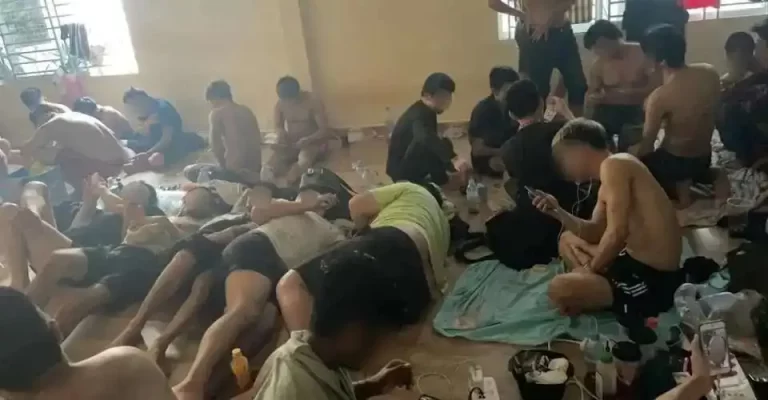
Two Cambodian journalists have been detained and charged by police with incitement and for causing serious disruption to social security after broadcasting a video online that they said showed victims in a scam compound being tortured.

Human rights group Licadho named the pair as Duong Akhara and Lay Socheat, who work for SA TV and Cambodia Star Daily News 24/24, respectively, saying the video showed a man handcuffed to a metal pole and being tortured.

It said both journalists were known for regularly publishing pro-government content and were detained in Correctional Center 1 prison late last week after their news outlets shared a video they also claimed was shot inside a cyber scam compound in Cambodia.

In full: https://www.ucanews.com/news/cambodian-journalists-held-over-scam-compound-torture-video/107708

Cambodia’s Proposed Atrocity Denial Law Will Stifle Historical Debate

0

On Friday, Cambodia’s government announced that its Cabinet had approved a draft bill that will toughen penalties for anyone denying atrocities carried out by the communist Khmer Rouge in the late 1970s.

The bill stipulates “the prosecution of any individual” who denies or condones the atrocities committed by Democratic Kampuchea, as the Khmer Rouge regime referred to itself, according to a government statement quoted by the AFP news agency. The bill’s definition of atrocities includes genocide, crimes against humanity, and war crimes, for which a U.N.-backed court prosecuted five top Khmer Rouge leaders between 2006 and 2022, eventually convicting three of them.

Led by “Brother Number One” Pol Pot, the Khmer Rouge ruled Cambodia from April 1975 until their overthrow by a Vietnamese invasion in January 1979, during which time they attempted a radical reengineering of Cambodian society along agrarian lines. The attempt cost the lives of an estimated 1.7 million people from starvation, illness, overwork, and outright execution.

In full: https://thediplomat.com/2025/01/cambodias-proposed-atrocity-denial-law-will-stifle-historical-debate/

Obituary: François Ponchaud, French Missionary Who Alerted the World to the Khmer Rouge

0

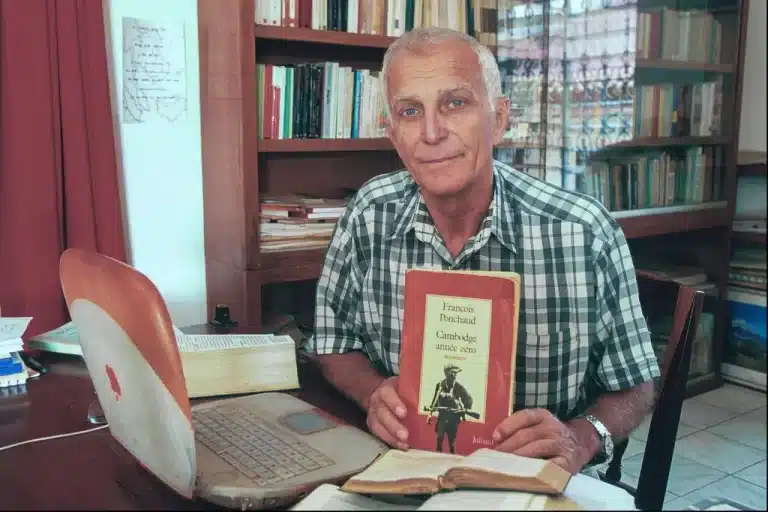
François Ponchaud, the French missionary who revealed the reality of Cambodia’s Khmer Rouge to the outside world, has died aged 85.

Ponchaud spent 56 years of his life as a missionary in Cambodia, and was the first to provide an authoritative account of the horrors committed by Pol Pot’s genocidal regime which ruled Cambodia from 1975 to 1979.

The world was willing to hope for the best when the Khmer Rouge took control of Phnom Penh in April 1975. The previous regime of Lon Nol had been corrupt, and the war between Lon Nol’s forces and the insurgents was over. The Khmer Rouge immediately ordered the entire population of Phnom Penh and other cities in Cambodia to leave for the countryside, citing the threat of imminent bombing by the United States.

In full: https://thediplomat.com/2025/01/obituary-francois-ponchaud-french-missionary-who-alerted-the-world-to-the-khmer-rouge/

‘A Good Chance People Are Going to Die’, as U.S. Halts Funding for Mine Clearing

0

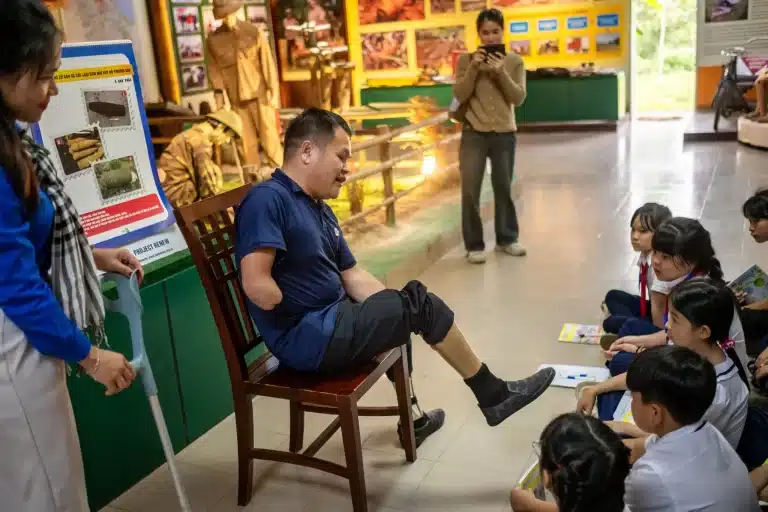
The Vietnam War ended half a century ago, but American weapons from that era continue to kill people to this day. Unexploded bombs rained down by American troops are littered across large swaths of Vietnam and neighboring Cambodia and Laos. They have killed tens of thousands and maimed many more since the fighting ended.

People have been working to clear out these bombs for decades, but experts say it may take another 100 years to finish the job. The United States is a big part of the effort and has given out more than $750 million over the past three decades to clear out the unexploded ammunition in the three countries.

But that funding has come to a grinding halt.

In full: https://www.nytimes.com/2025/01/28/world/asia/trump-mines-vietnam-cambodia-laos.html

Cambodia drafts new law banning Khmer Rouge denials

0

The Cambodian government has approved a draft law and stiff penalties to counter those who would deny the atrocities committed by the Khmer Rouge which ruled this country between 1975 and 1979, when up to a third of the population perished.

Under the law, Khmer Rouge deniers can be charged and jailed for terms of one-five years and subjected to fines of US$2,500 to $125,000. The law is expected to pass the National Assembly given the ruling Cambodian People’s Party (CPP) holds 120 of its 125 seats.

Details of the law were released by the cabinet as the 50th anniversary of the fall of Phnom Penh to Pol Pot and his ultra-Maoists approaches and as the Khmer Rouge tribunal is finalizing legal work from a marathon war crimes trial that secured convictions for genocide and crimes against humanity.

In full: https://www.ucanews.com/news/cambodia-drafts-new-law-banning-khmer-rouge-denials/107691

François Ponchaud, Who Alerted World to Cambodian Atrocities, Dies at 86

0

The Rev. François Ponchaud, a French Catholic priest whose book “Cambodia: Year Zero” alerted the world to the atrocities being committed by the communist Khmer Rouge that would eventually take the lives of nearly two million people, died on Jan. 17 in Lauris, France. He was 86.

His death was announced by the Paris Foreign Missions Society, of which Father Ponchaud was a member. The society said he died at its retirement facility. The cause was cancer, a friend, the historian Henri Locard, said.

In 1975, at the end of the Indochina war, only sketchy accounts of the Khmer Rouge horrors had reached the outside world, and they were widely dismissed by those in the West who wanted to put the conflicts in Vietnam and Cambodia behind them.

In full: https://www.nytimes.com/2025/01/27/world/europe/francois-ponchaud-dead.html

The Need to Reform Cambodian Agriculture Based on Neighboring Countries’ Experiences and Achievements

0

Cambodian farmers, the backbone of the country’s economy and food security, face persistent and deepening poverty. Low agricultural prices and a lack of market opportunities force them into crippling debt, often resulting in land confiscation. Many farmers are left with no choice but to migrate to Thailand for low-paying jobs to survive and repay their debts, draining rural areas of labor and undermining agricultural productivity.

The Cambodian government has implemented a rice price support policy intended to stabilize farmer incomes, but it has proven ineffective. This policy relies on loans to private rice millers, often linked to the political elite, who prioritize profits over fair pricing for farmers. As a result, farmers continue to struggle while intermediaries benefit disproportionately.

In full: https://thegeopolitics.com/the-need-to-reform-cambodian-agriculture-based-on-neighboring-countries-experiences-and-achievements/

Cambodia to punish Khmer Rouge genocide denial with jail under draft law

0

Cambodia’s government has approved a draft law that will jail for up to five years anyone denying atrocities, including genocide, committed by the Khmer Rouge.

RELATED

The draft law – which aims to prevent a repeat of the Khmer Rouge’s crimes and provide justice for victims – was approved during a cabinet meeting chaired by the prime minister, Hun Manet, on Friday, the government spokesperson Pen Bona said.

The bill stipulates “the prosecution of any individual” who denies or condones the atrocities committed under the Khmer Rouge, according to a government statement.

In full: https://www.theguardian.com/world/2025/jan/25/cambodia-to-punish-khmer-rouge-genocide-denial-with-jail-under-draft-law

Cambodia likely to gain from Trump tariffs

0

Cambodia is expected to benefit from US President Donald Trump’s focus on imposing tariffs against China and possibly also Vietnam to address bilateral trade imbalances, Mekong Strategic Capital says.

According to the Phnom Penh-based investment and advisory firm, “Trump’s focus on China ( and potentially Vietnam ) will result in more manufacturing shifting to Cambodia.

“This may accelerate what has already been a longer-term trend,” says the firm’s snapshot for Cambodia this year, released on January 22. “But there may be downsides.”

In full: https://www.theasset.com/article/53308/cambodia-likely-to-gain-from-trump-tariffs