Home Blog

Live Blog: Cambodia’s Opposition Returns

0

Despite efforts by Cambodian government of Prime Minister Hun Sen to block their return to the country, leaders of the Cambodia National Rescue Party have vowed to return home on Saturday, Nov 9 — the country’s independence day.

In full: https://www.voacambodia.com/a/live-blog-cambodias-opposition-return/5155995.html

Bernard Krisher, Free Press Champion in Cambodia, Dies at 87

0

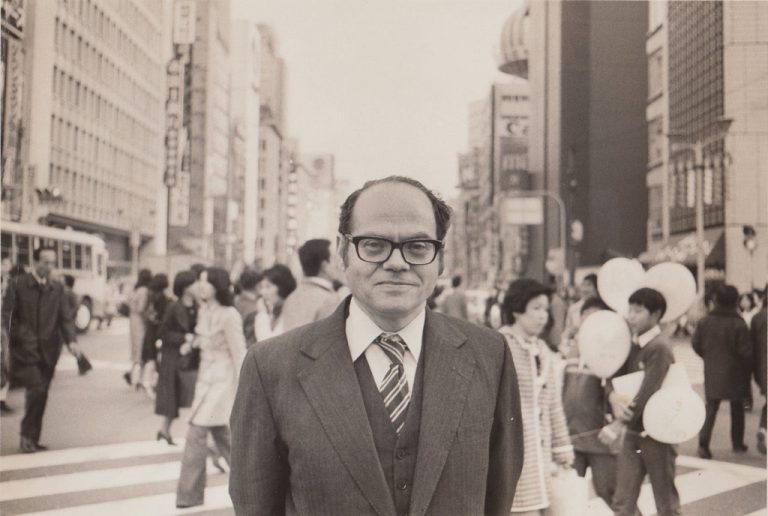
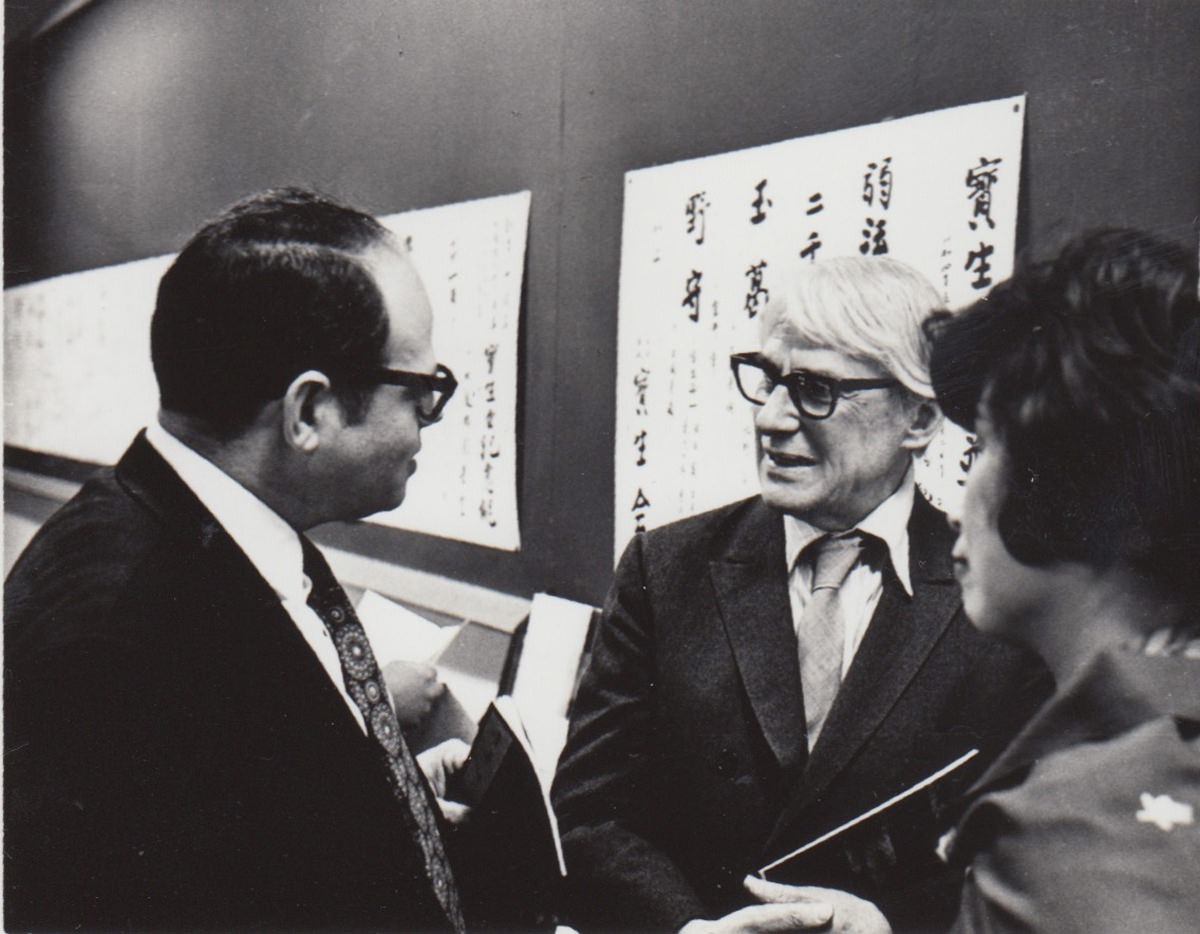
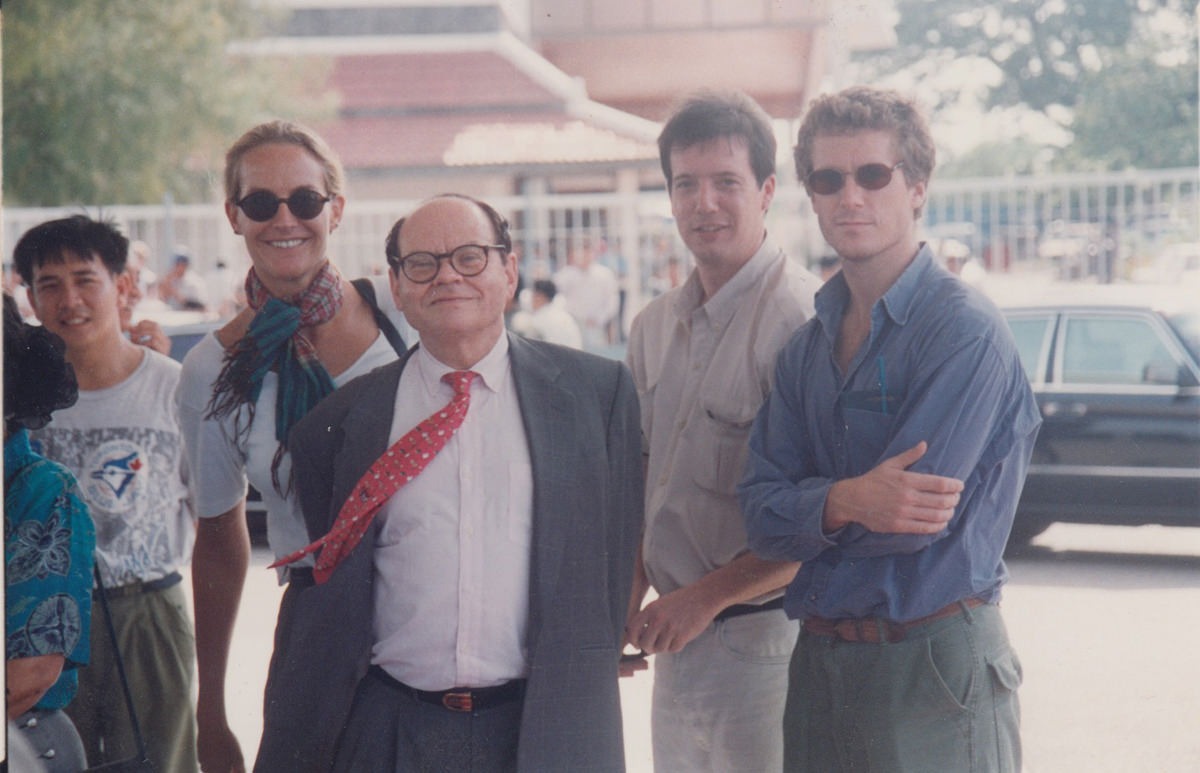
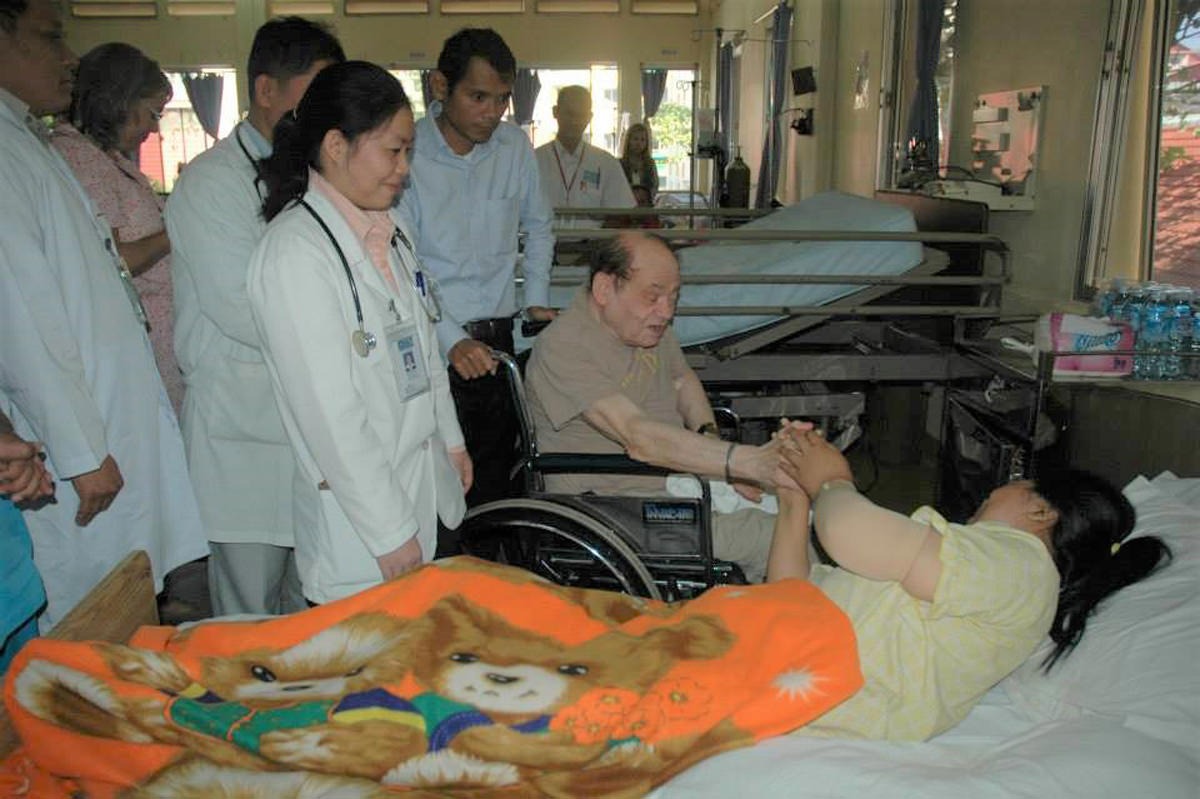
Bernard Krisher, an idealistic, driven journalist who founded Cambodia’s first English-language daily newspaper and, as a philanthropist, established a hospital, an orphanage and hundreds of schools around Cambodia, died on March 5 in Tokyo. He was 87.

His death was reported on Monday by his newspaper, The Cambodia Daily, which quoted family members as saying the cause was heart failure.

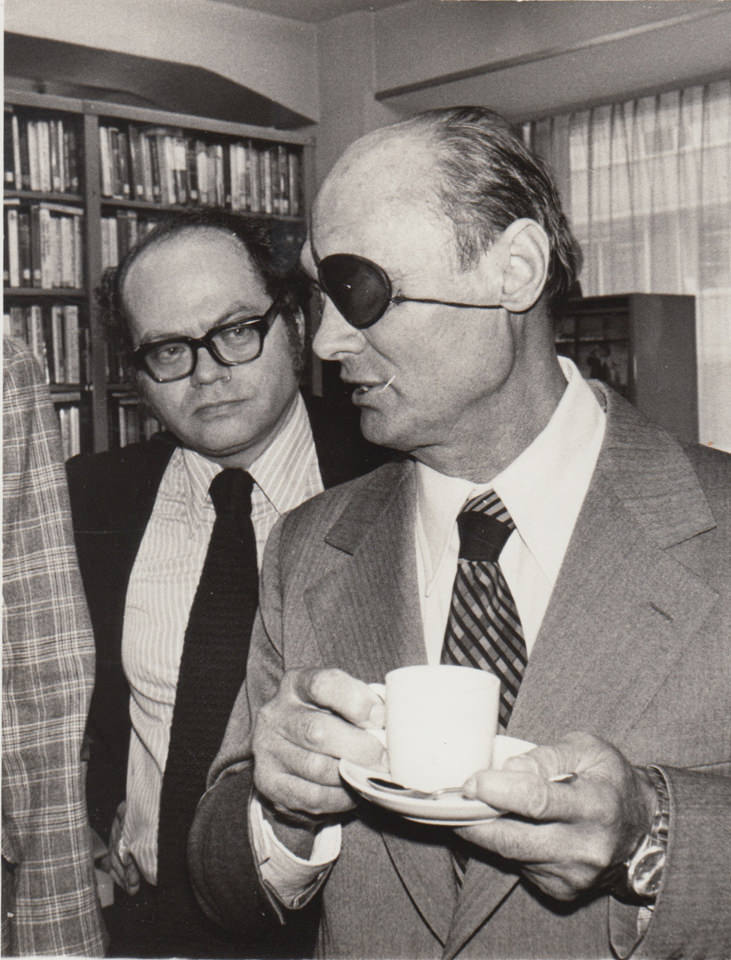
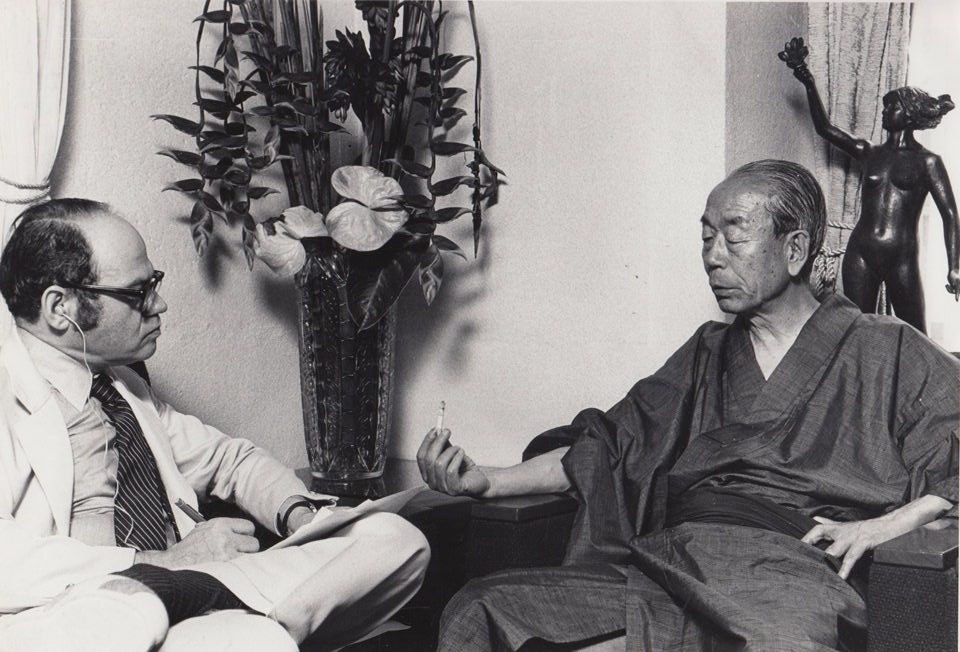
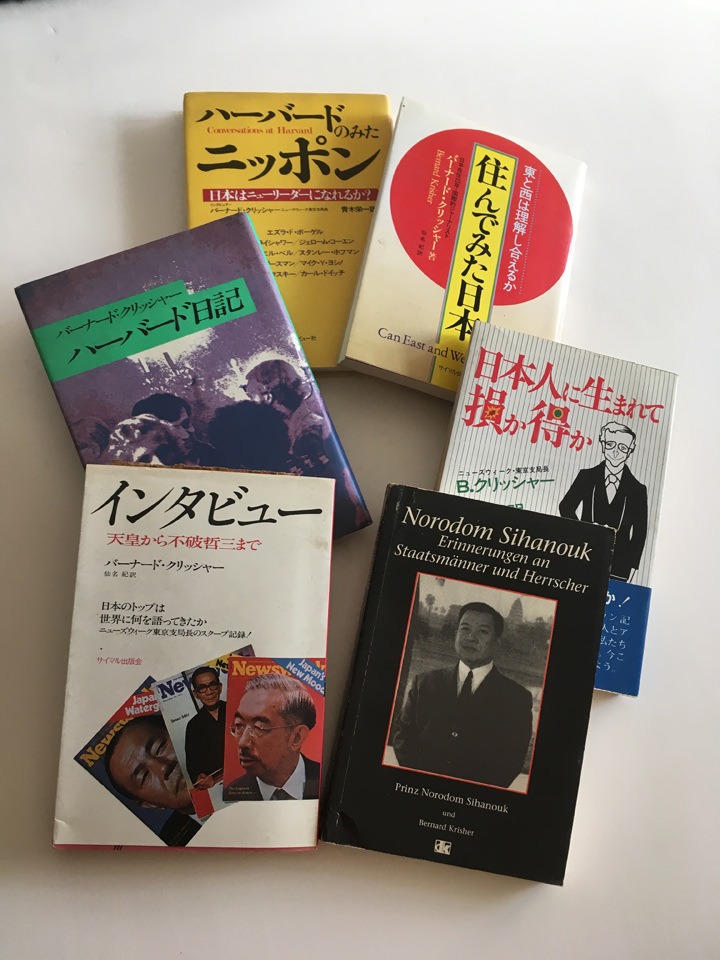
In a long career that included 13 years as Tokyo bureau chief for Newsweek magazine, Mr. Krisher became a fixture of Asia journalism, specializing in exclusive interviews with figures like President Sukarno of Indonesia and Emperor Hirohito of Japan.

In full: https://www.nytimes.com/2019/03/20/obituaries/bernard-krisher-dead.html

Bernard Krisher, Journalist and Philanthropist, Dies at 87

Bernard Krisher, chairman of World Assistance for Cambodia, publisher of The Cambodia Daily and former Newsweek Tokyo bureau chief, died on March 5 at a hospital in Tokyo. He was 87.

His death from heart failure was disclosed by his family following a private burial in New York.

Krisher, who began his career as a foreign correspondent in Japan, dedicated his last three decades to humanitarian work in Cambodia.

The Cambodia Daily, the first of his projects, was the country’s first English-language newspaper, with a mission of reporting “all the news without fear or favor.” The paper was a training ground for Cambodian and expatriate journalists. It published local and international news to readers in Phnom Penh. The regime’s forced closure of the print edition in September 2017 drew international condemnation.

Krisher founded nonprofits that built schools and a hospital. His rural schools project has, to date, built over 560 state schools across every province. While not personally wealthy, Krisher leveraged his rolodex and chutzpah to solicit funds from private donors, and the World and Asian Development banks. Known by many around him as Bernie “Pusher,” he once said, “I remain very New York—quite aggressive, confrontational against authority and establishment.”

The projects that became closest to his heart were the Sihanouk Hospital Center of HOPE that provides free medical care to the poor and an educational center for foster children, orphans and children from remote villages that don’t have a high school.

Krisher moved from New York to Japan in 1962, joining Newsweek as a reporter in the magazine’s Tokyo bureau. He had traveled to the country four years earlier when he was sent to Asia on a six-week reporting assignment by the New York World-Telegram & Sun newspaper, and met his future wife, Akiko, with whom he was married for 58 years until his death. He attributed the works of Lafcadio Hearn with inspiring his interest in Japan and on his decision to live and work there.

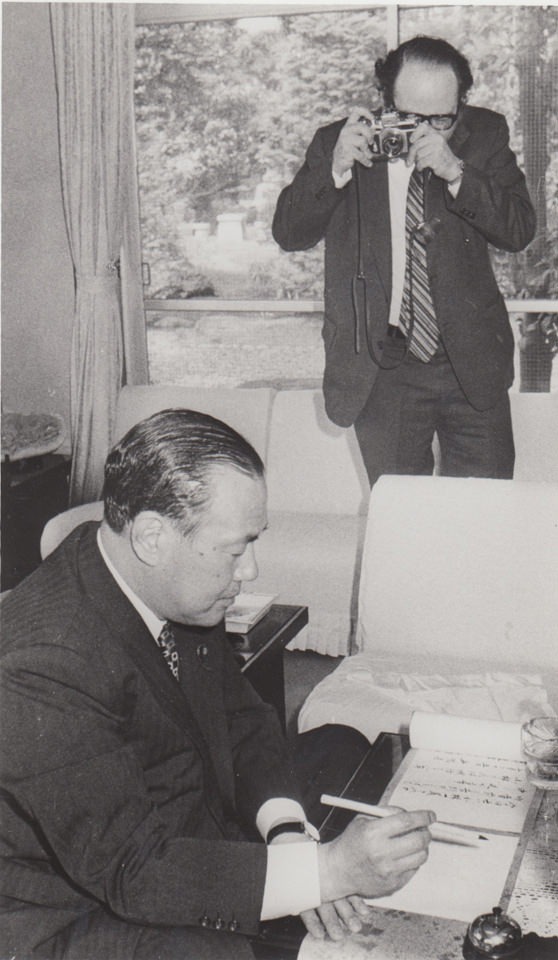
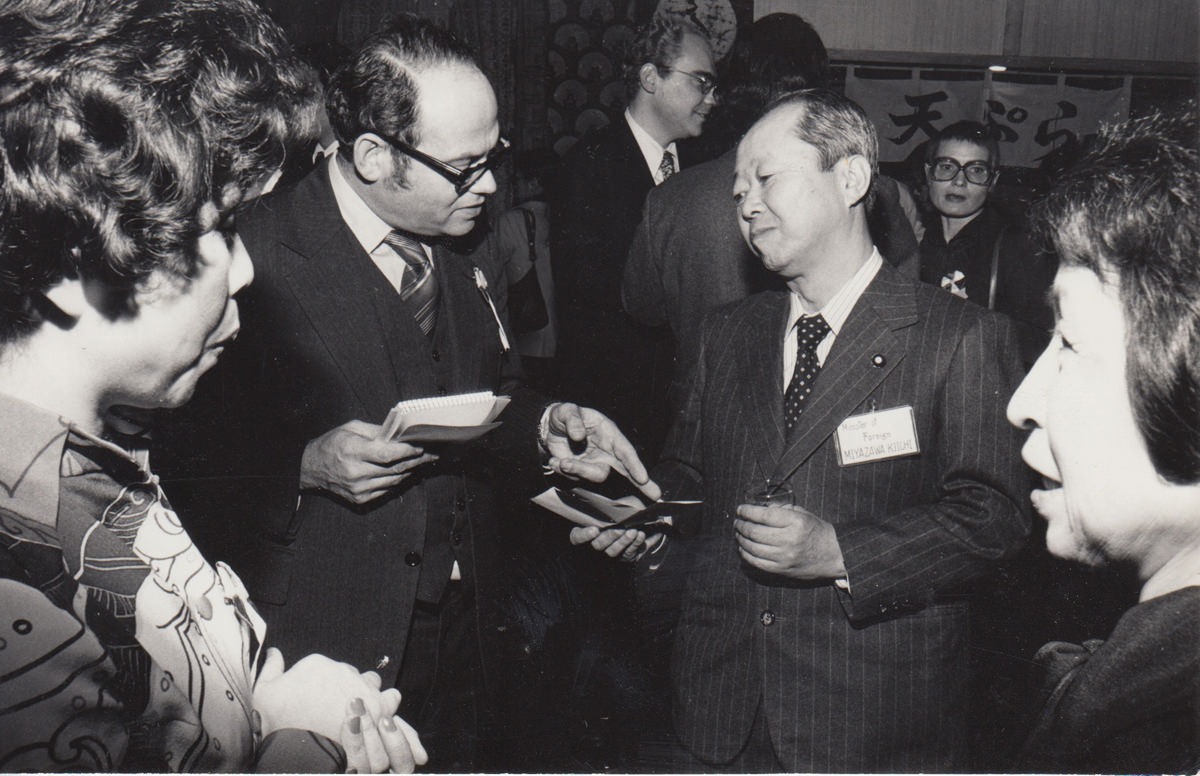
Krisher was promoted to become Newsweek’s Tokyo bureau chief in 1967, a position he held for the next 13 years. Krisher interviewed many notable personalities including all Japanese prime ministers and other politicians, business leaders and cultural figures. His most famous interview was a one-on-one exclusive print interview with Emperor Hirohito just before the emperor’s historic visit to the U.S. in 1975.

Krisher’s beat included other parts of Asia, and he traveled widely through parts of Southeast Asia and made frequent trips to South Korea. He succeeded in landing the first exclusive interview with Indonesian President Sukarno in 1964, at a time when Western journalists were on the leader’s blacklist. Sukarno also introduced him to Cambodia’s Prince Norodom Sihanouk, who invited him to Cambodia.

Sihanouk, however, severed ties with the U.S. in 1965, in part over the U.S. government’s refusal to apologize over an article Krisher wrote for Newsweek. Sihanouk eventually restored diplomatic relations with the U.S., and the prince and Krisher subsequently formed a close friendship that led to Krisher’s humanitarian work in the country later in life.

Krisher was also supportive of Kim Dae-jung when the South Korean dissident was a political prisoner. He ran interviews and articles critical of the South Korean government in Newsweek. When Kim became president of the country in 1998, he kept his promise made years ago of granting Krisher the first interview.

After Newsweek, Krisher moved to open the Tokyo bureau for Fortune magazine in 1980 and remained its correspondent until 1984. At the same time, he joined a leading Japanese publisher, Shinchosha, as chief editorial advisor and helped start up Focus, a successful news-oriented photo-weekly, and then set up the Japanese edition of Wired for another publisher, Dohosha. He was also the Far East representative for the MIT Media Lab.

In 1993, Krisher launched The Cambodia Daily to help establish a free press in Cambodia, at the time of the nation’s reconstruction and rehabilitation following the 1991 Paris Peace Agreement concluding two decades of civil war and Sihanouk’s return from exile and instatement as head of state of the country.

Against the advice of many, including Sihanouk who cautioned him that he might be killed, Krisher started the newspaper believing that a democracy needed a free press and told his staff that a paper should be like a gadfly to keep a check on those in power.

Krisher credited the humanitarianism of Albert Schweitzer, the Nobel Peace Prize-winning medical missionary who had built a charity hospital in Africa and whom he met in New York in the 1950s, as his inspiration to embark on his work in Cambodia.

For Krisher, his crowning achievement was the construction in the mid-1990s of the Sihanouk Hospital Center of HOPE in Cambodia’s capital, Phnom Penh, which provides free medical care to the poor and ran a telemedicine program in remote villages. He was the founder and chairman of the hospital, which was built on land donated by King Sihanouk.

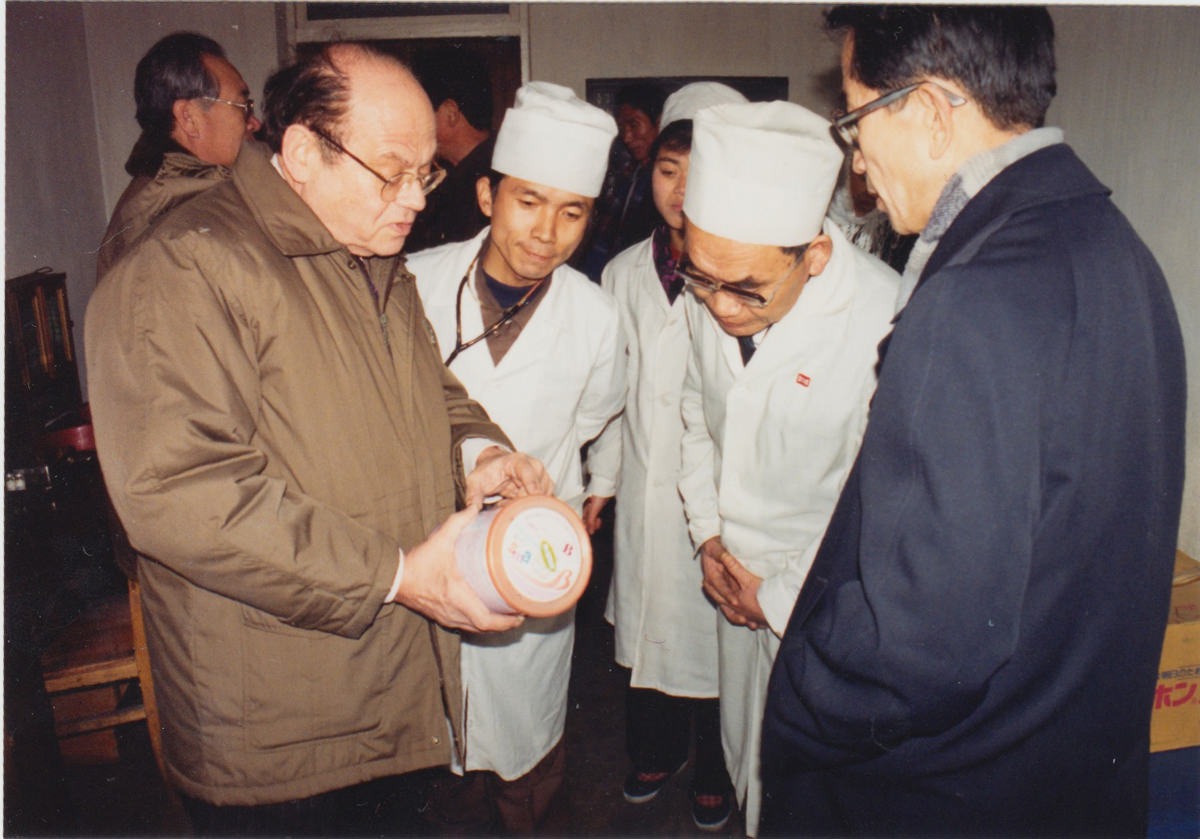
Krisher also made several trips to North Korea in the 1990s to distribute rice and medical supplies to famine victims.

Krisher was born on August 9, 1931, in Frankfurt, Germany, where his mother had gone to give birth close to her parents. The family lived in Leipzig, where his father, a Jew from Poland, owned a fur shop. Krisher and his family fled Germany in 1937 for the Netherlands and France to escape Nazi persecution. He attended two years of elementary school in Paris. When the Germans invaded France, Krisher’s family fled first to the Spanish border seeking onward transit to Portugal. There, Krisher had a fateful encounter on the street with Aristides de Sousa Mendes, the Portuguese consul who issued visas for his family and countless other Jews, against the order of his government.

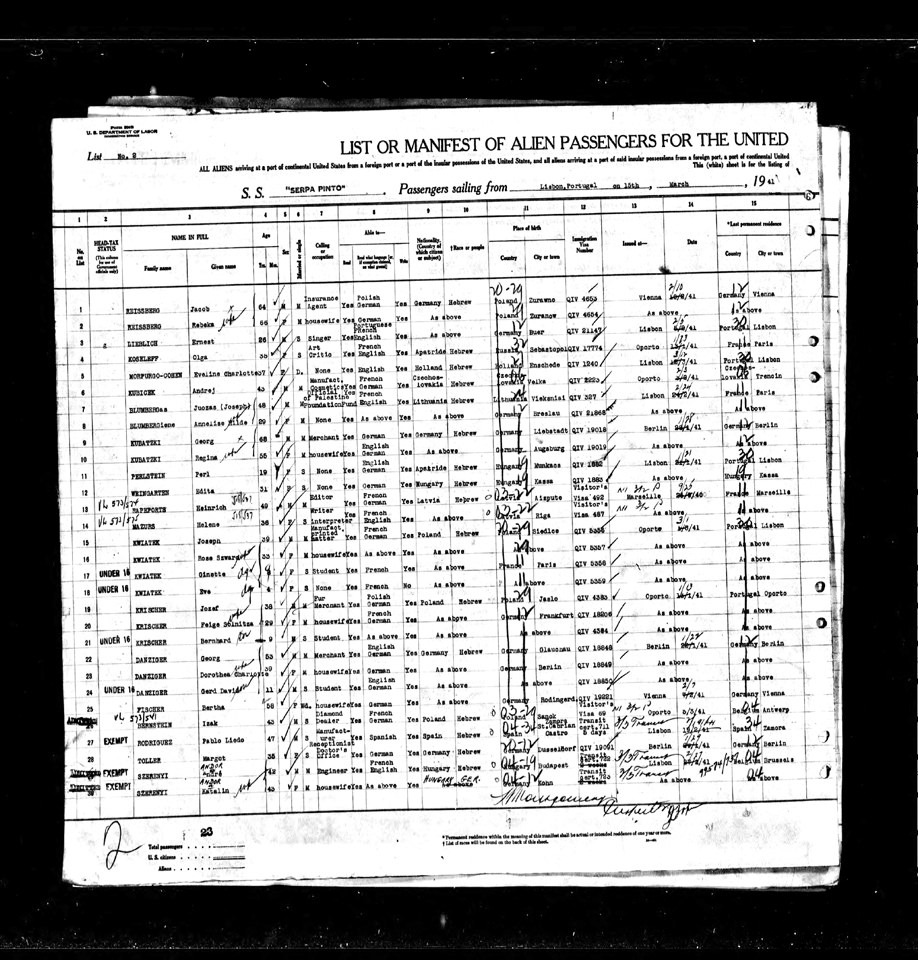
Krisher’s family fled France via Spain for Portugal where they lived as refugees. They emigrated to the U.S. on the vessel Serpa Pinto, known as the “ship of destiny,” in 1941, arriving through Ellis Island and settling in Queens, New York. Krisher attended New York City public schools, entering elementary school without knowing English, and graduated from Forest Hills High School. He obtained a bachelor’s degree in comparative literature from the city’s Queens College in 1953.

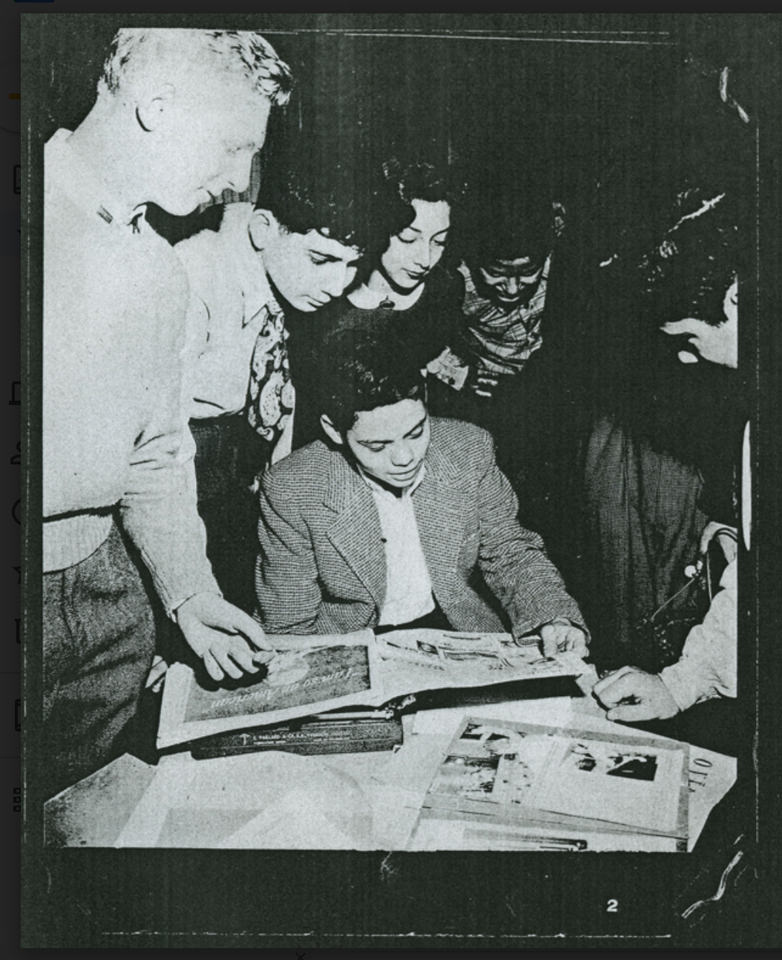
From the time he was a child, Krisher knew that he wanted to be a journalist. When he was 12, he started publishing his own small teenage magazine after the magazines he sold as a delivery boy went bankrupt. He filled his magazine, called Pocket Mirror, which he mimeographed in his Queens apartment, and subsequently Picture Story, with interviews of celebrities such as Babe Ruth, Frank Sinatra and Trygve Lie, the first secretary-general of the United Nations.

He said he learned most of his techniques of journalism during this time. “Persistence, energy, enthusiasm were the key essentials of this profession,” he said, “and the main enemy is cynicism.”

During college, he worked for the New York Herald Tribune as a campus correspondent and copy boy, including at the 1948 and 1952 Democratic National Conventions. He was also an editor at the college student newspaper, The Crown, where, at the height of McCarthyism, he wrote articles critical of the blacklisting of professors branded as communists and being dismissed from their teaching posts. Krisher took heat from the administration, but when he didn’t stop writing the articles, the college president wanted him removed from the newspaper and wrote the editor of the Herald Tribune to have him dismissed from his job there, but the paper refused.

Krisher was drafted into the army in 1953 and stationed for two years in Heidelberg, Germany, as a reporter for the European Stars and Stripes.

He joined the New York World-Telegram & Sun in 1955, first as a reporter, then assistant editor.

From 1961-62, he studied at Columbia University on a Ford Foundation fellowship in advanced international reporting, specializing in Japanese studies at the East Asian Institute. In 1962, he left the World-Telegram & Sun and moved to Japan to join Newsweek.

On his experience escaping the Holocaust, Krisher would say that he never forgot the kindness of strangers who helped his family, and his gratitude inspired him, after building a successful career, to give back to society and help those in need.

Krisher is survived by his wife, his two children and two grandchildren.

One of his last acts was retaining a Japanese law firm to pursue a defamation action against the Atlantic for a misleading profile published in December 2017.

Thailand Warns UNCLOS Maritime Case Could Strain Ties as Cambodia Pushes Ahead with Dispute Process

Thailand has said it is prepared to take part in a United Nations maritime dispute mechanism initiated by Cambodia, while warning that the move could undermine efforts to rebuild trust and improve bilateral relations between the two neighbours.

Thai Foreign Minister Sihasak Phuangketkeow told the Bangkok Post on 4 June that Bangkok was disappointed by Cambodia’s decision to pursue compulsory conciliation under the United Nations Convention on the Law of the Sea (UNCLOS), arguing that the process could take years and risk damaging relations between the two countries.

Despite its concerns, Thailand said it was ready to participate in the proceedings. Sihasak said Bangkok had begun preparing legal documents and procedural requirements, including the appointment of conciliators to represent Thailand.

However, he questioned the effectiveness of the UNCLOS mechanism, saying it was unlikely to produce a legally binding outcome. Instead, he argued, the process would conclude with a report recommending further negotiations between the two sides.

Cambodia has rejected that view. Eat Sophea, Secretary of State at Cambodia’s Ministry of Foreign Affairs, said the compulsory conciliation process is firmly grounded in international law and cannot be regarded as illegitimate. She said Cambodia’s objective was to secure a fair and equitable settlement, not to prevail over Thailand.

On 2 June, Cambodia formally notified Thailand and the United Nations Secretary-General of its decision to launch compulsory conciliation proceedings under UNCLOS. Phnom Penh has given Bangkok 21 days to respond, although Cambodian officials say no official reply has yet been received.

Eat Sophea said Cambodia had already appointed two international experts to represent the country in the process.

One of them is Peter Taksoe-Jensen, a veteran Danish diplomat and international legal expert who previously served as ambassador to the United States, Japan, and India. He also chaired the UNCLOS conciliation commission that helped resolve the maritime boundary dispute between Australia and Timor-Leste.

The second appointee is Jean-Marc Thouvenin, Secretary-General of The Hague Academy of International Law and a specialist in international legal disputes who has appeared before the International Court of Justice.

Under UNCLOS rules, each side appoints two conciliators. The four appointees then select a fifth member, who serves as chair of the commission and must be a national of neither Cambodia nor Thailand.

The process can continue even if one party declines to participate. However, any recommendations issued by the conciliation commission are not legally binding.

Cambodian Prime Minister Hun Manet announced the move after Thailand withdrew from the 2001 Memorandum of Understanding (MOU44), which had provided a framework for negotiations over overlapping maritime claims between the two countries.

Thailand has previously objected to the UNCLOS mechanism because it introduces third-party involvement into the dispute. Nevertheless, Bangkok’s latest position suggests it is preparing to engage with the process should it move forward.

Cambodia grants military positions to 41 relatives of fallen and severely wounded soldiers

The Cambodian government has approved the recruitment of 41 family members and relatives of fallen and severely wounded soldiers into the armed forces, in what observers describe as a gesture of recognition and support for military personnel who sacrificed during combat operations.

A decision signed by Prime Minister Hun Manet in March, but only made public on 3 June, authorises the Ministry of National Defence to appoint the 41 individuals to military positions and confer on them the rank of Second Lieutenant under units of the Royal Cambodian Army.

The document states that the beneficiaries are family members and relatives of soldiers who were killed or seriously injured in combat. However, it does not specify whether they are related to troops involved in the two border clashes between Cambodia and Thailand in 2025.

Despite the lack of detail, the move has been widely interpreted as part of the government’s commitment to support soldiers who lost their lives or suffered serious injuries during the border conflict with Thailand.

The decision follows an earlier pledge by Hun Manet, who wrote on Facebook on 29 July 2025 that his government would implement a package of support measures for the families of military personnel killed, injured, or permanently disabled while on duty.

Under that policy, relatives of soldiers and police officers who died or became unable to continue serving because of disability would be eligible for a government position within the same institution where the affected officer had served.

Hun Manet also instructed the Ministry of National Defence and relevant state institutions to develop additional incentive policies for members of the armed forces and police who directly participated in operations to defend Cambodia’s territorial integrity.

Commenting on the latest decision, Yong Peou, Secretary-General of the Royal Academy of Cambodia, said the measure reflected the government’s commitment to honouring its promises to military families.

He said providing positions to the next generation of fallen and severely wounded soldiers was both a form of support for bereaved families and a way of encouraging the continuation of public service and national defence traditions.

Cambodia launches “forced conciliation” procedure under UNCLOS in maritime dispute with Thailand 

The Royal Government of Cambodia has announced the launch of the “forced conciliation mechanism” under the United Nations Convention on the Law of the Sea (UNCLOS) to resolve overlapping maritime claims with Thailand. 
 
In a special message on June 2, Prime Minister Hun Manet said that Cambodia had sent an official letter to the Thai side and the Secretary-General of the United Nations to formally initiate the procedure. 
 
Hun Manet said that the decision to use the mechanism was to protect Cambodia’s national sovereignty and maritime rights based on the principles of international law. 
 
“Cambodia remains committed to building relations with the Thai side based on peace, cooperation, and mutual respect. At the same time, Cambodia’s national sovereignty and maritime rights must be absolutely respected,” the Prime Minister said. 
 
The Cambodian Prime Minister asserted that the initiation of the “forced conciliation” procedure is not an escalation of tensions between the two countries, but rather a search for a solution through negotiations and mediation by international experts, in accordance with the framework set out in UNCLOS. 
 
He added that the measure was not a unilateral action, but rather an expression of Cambodia’s will to resolve the dispute peacefully and in accordance with international law. 
 
Hun Manet added, “Using the forced conciliation mechanism under UNCLOS does not mean that Cambodia is withdrawing from dialogue. On the contrary, Cambodia is bringing the dialogue into an international framework that has a clear structure and is recognized by both countries.” 
 
The announcement comes as Cambodia and Thailand remain at odds over the demarcation of maritime boundaries in some areas of the Gulf of Thailand, where both sides claim overlapping rights. UNCLOS provides several legal mechanisms for resolving maritime disputes, including a conciliation procedure involving an independent international commission.

Thirty two police officers and four civilians charged over alleged theft from Prek Chak casino

Cambodian authorities have charged 32 police officers and four civilians over the alleged theft of materials from the Prek Chak casino site in Kampot province, which had been closed and preserved as evidence in a major online fraud case.

Kampot provincial police chief Mao Chanmathurith said on May 31 that prosecutors had charged all 36 suspects with initiating and conspiring in aggravated theft, destroying evidence, and receiving stolen property under Cambodia’s Criminal Code.

He also publicly released the identities of the suspects on the official social media page of the provincial police commission.

The case has drawn wide public attention because several of the accused police officers hold senior positions. They include a deputy Kampot provincial police chief in charge of border affairs, the Kampong Trach district police chief, six deputy district police chiefs, the commander of Border Protection Police Battalion 601, and several local police post chiefs.

According to local media reports, the officers had taken part in an operation targeting online fraud at the Prek Chak casino, near the Cambodia-Vietnam border. After the raid, several items kept as evidence were reportedly found missing from the site.

The same reports said the stolen items included mobile phones, computers, and other valuables worth tens of thousands of US dollars.

The Prek Chak casino site has been linked to former tycoon Li Kuong, who was detained by the Phnom Penh Municipal Court in January 2026 on charges related to unlawful recruitment for exploitation, aggravated fraud, and money laundering.

There have also been allegations that some military police officers may be connected to the same case. But Eng Hy, spokesperson for the National Gendarmerie, told reporters that he had received information about the alleged involvement, but there had not yet been any official confirmation from prosecutors.

The case is being seen as unusual in Cambodia, with a large number of law enforcement officers facing criminal charges linked to evidence in a cross-border crime and online fraud investigation.

Cambodia sets June 6, 2027, for commune and sangkat council elections as monitors call for wider political space

Cambodian Prime Minister Hun Manet has set Sunday, June 6, 2027, as the date for the country’s sixth commune and sangkat council elections, a key local vote seen as an important test of political support ahead of national elections.

The announcement has been welcomed by election monitoring groups, which say an early date gives political parties, institutions, and voters enough time to prepare. But they are also urging the government to widen political space and ensure free participation for all relevant groups.

Korn Savang, a monitoring and advocacy coordinator at COMFREL, welcomed the early announcement of the election date. He said it could help political parties, election bodies, and voters make proper preparations.

But he also expressed hope that, following the pardon of Kem Sokha, the government would consider pardoning or releasing other detained political activists. He said this would allow them to freely take part in political activities and the election process.

The election monitor said an open political environment and the protection of political rights for all citizens are essential for an election that is free, fair, and acceptable to all sides.

Commune and sangkat council elections are held every five years and are widely seen as a major indicator of grassroots political support in Cambodia.

In the previous election, held on June 5, 2022, 17 political parties took part. Nine of them won seats across 1,652 communes and sangkats nationwide.

According to official results, the Cambodian People’s Party won 9,376 seats, including 1,648 commune chief and sangkat chief positions. The Candlelight Party won 2,198 seats, including four commune chiefs and sangkat chief positions.

FUNCINPEC won 19 seats, while the Khmer National United Party won 13 seats. Other parties that gained seats included the Grassroots Democratic Party with six, the Khmer National Love Party with five, the Cambodian Youth Party with three, the Cambodia Nationality Party with one, and the Beehive Social Democratic Party with one.

Former tycoon Leng Channa and her associates admit to receiving nearly $100 million from a fraud scheme

Suspect Leng Channa and two other associates admitted to receiving between $93 million and $98 million from an individual known as “Master 25” in a major investment fraud case, according to the results of the 10th meeting of the National Council of the Anti-Corruption Unit (ACU) released on May 28, 2026.

According to the ACU, suspects Leng Channa, along with Chan Khin and Phon Samean, confessed that after receiving tens of millions of dollars, they used it to buy land for development projects and continued to pay interest to “Master 25” and those who invested in the project.

The case is considered very complex, involving many high-ranking officials and accomplices, while the victims are estimated to be around 5,000 people.

Suspect Leng Channa and his accomplices were arrested by Siem Reap authorities on March 12, 2024, in connection with a scheme to defraud citizens by promising high monthly interest rates.

The following day, the Siem Reap Provincial Court decided to charge Leng Channa, the CEO of Brilliant City, and two other deputy CEOs with aggravated fraud, failure to fulfill obligations on negotiable instruments, and money laundering.

After more than a month of investigation, the Siem Reap Provincial Court on April 17, 2024, ordered the detention of five defendants and froze 183 bank accounts and certain assets related to Billion City World Co., Ltd.

In connection with this case, the Anti-Corruption Unit also opened an investigation into two senior officials, Mr. Sean Borat, Secretary of State at the Ministry of Education, and Mr. Sar Thavy, Undersecretary of State at the Ministry of National Defense, in July 2025.

The fraud case of former tycoon Leng Channa was also assigned by Prime Minister Hun Manet to Mr. Ky Tech, head of the government legal team, to handle and protect the interests of the victims.

The government stated that the investigation found that the investment project of Brilliant City was a Ponzi Scheme that took money from new investors and paid it to old investors to create continued credibility.

US says allegations of US involvement in anti-Cambodian government in Kem Sokha case were unfounded

The US Embassy in Phnom Penh said the release of former opposition leader Kem Sokha was a positive development and the United States maintained its position that his conviction, which involved allegations of US involvement in anti-Cambodian government activities, was unfounded.

A statement from the US Embassy in Phnom Penh on May 29 said the United States welcomed news of Kem Sokha’s release. The United States has consistently called for Kem Sokha’s release.

“The United States maintains its position that his conviction, which involved allegations of US involvement in anti-Cambodian government activities, is unfounded,” the statement said.

The US Embassy in Phnom Penh added that his release was a positive development and the United States continues to encourage the Cambodian government to ensure that its citizens can exercise their rights to peaceful assembly and freedom of expression.

The United States has consistently denied all allegations that it is involved with Kem Sokha in a plot to overthrow the Cambodian government. The United States considers the allegations to be baseless.

The US Embassy in Phnom Penh issued a letter welcoming the news of Kem Sokha’s release after several foreign ambassadors in Cambodia, including the European Union, France, Germany, the United Kingdom, and Australia, welcomed the pardon and considered it a positive step for the political situation in Cambodia. At the same time, Western countries have called for ensuring political freedom, the participation of opposition parties, and an end to the use of the judicial system for political purposes.

CNRP leader Kem Sokha was arrested in a raid in the middle of the night on September 3, 2017, following a complaint by the Cambodian People’s Party (CPP) alleging that the opposition leader had conspired with the United States to overthrow Hun Sen’s government.

Since his arrest, Kem Sokha has fought his way through 66 trials in the lower court, but on March 3, 2023, the Phnom Penh Municipal Court sentenced him to 27 years in prison for conspiracy with a foreign state and banned him from politics for life.
However, Kem Sokha continued to appeal the lower court’s verdict to the Court of Appeal, where he was tried nine times. However, in the last appeals hearing on April 30, the court decided to extend Kem Sokha’s sentence by banning him from leaving Cambodia for an additional five years.

On May 25, 2026, Acting Head of State Hun Sen signed a royal decree pardoning CNRP leader Kem Sokha. However, the royal decree only pardoned the original charges, which meant that he was pardoned for treason or conspiracy with a foreign state. But additional or additional punishments, such as deprivation of political rights and a ban on leaving Cambodia, have not been abolished.

Prak Sokhonn tells Thailand that Cambodia is ready to resolve border issues fairly

Cambodian Foreign Minister Prak Sokhonn told his Thai counterpart that Cambodia is ready to cooperate with the Thai side to implement measures aimed at finding a fair and lasting solution to the border issue.

The remarks were made during a meeting between the two countries’ foreign ministers on May 26 while attending the High-Level Open Meeting of the United Nations Security Council (UNSC) in New York, the United States. According to a press release from the Cambodian Foreign Ministry issued on May 27.

According to the same statement, Prak Sokhonn stated that Cambodia is ready to implement the measures that the leaders of the two countries agreed upon in the meeting in Cebu, Philippines, to rebuild trust and promote the search for a peaceful solution.

The Cambodian Foreign Ministry said that the meeting was a follow-up to the trilateral talks between Cambodia, Thailand, and the Philippines held on the sidelines of the 48th ASEAN Summit on May 7 in Cebu. During the meeting, the leaders tasked the Cambodian and Thai foreign ministers to discuss confidence-building measures and ways forward.

The Cambodian side stated that during the talks, the two Foreign Ministers exchanged views openly and frankly on the border situation between the two countries.

During the meeting, Mr. Prak Sokhonn also reiterated Cambodia’s position on the initiation of the Compulsory Conciliation mechanism under the United Nations Convention on the Law of the Sea (UNCLOS). Cambodia also called on the Thai side to fully and in good faith implement the contents of the Joint Declaration dated December 27, 2025.

Before meeting with his Thai counterpart, Mr. Prak Sokhonn stated at the UNSC meeting that Cambodia does not recognize the modification of the border by force or the creation of a de facto situation. He also expressed concern about what Cambodia called the continued illegal occupation of Cambodian territory by the Thai military.

In the same speech, the Cambodian Foreign Minister affirmed that Cambodia still values ​​peace as the country has experienced decades of conflict and suffering, and that conflicts must be resolved through diplomatic dialogue, mutual respect, and adherence to international law.

Hun Sen says even his grandchildren will serve under Cambodia’s conscription law as rights groups fear unequal enforcement

Cambodian Prime Minister Hun Sen has announced that Cambodia’s military conscription law must be applied equally to all citizens who meet the legal requirements, stating that even his grandchildren must fulfill this obligation without exception, as civil society worries about unequal implementation.

The statement was made on May 27, 2026, during a meeting with councilors and leaders of departments and organizations in Kampong Chhnang province.

Hun Sen said that his grandchildren, who are of Cambodia’s military conscription age, will follow the law like other citizens. He also called on civil servants to abandon the idea of ​​​​familism and the confusion between the role of the state and family relations, which can affect the trust of citizens.

On the same occasion, the Senate President also urged civil servants to continue implementing the policy of safe villages and communes and to pay attention to the families of frontline soldiers, war victims, the disabled, and veterans.

The law on Cambodia’s military conscription was signed into law on May 23, 2026, after being approved by the National Assembly more than a week ago. Under the law, Cambodian men between the ages of 18 and 25 must serve in the military for 24 months, while women can join on a voluntary basis.

The government claims that Cambodia’s military conscription law will help instill discipline, morality, respect for order, and a sense of social responsibility in young people.

However, some civil society groups have expressed concerns about the implementation of the law.

Soeng Senkaruna, president of the Australia-based Khmer Democracy Organization, told The Cambodia Daily that in principle, the law should be applied equally to the rich, the poor, the powerful, and the powerless. But he questioned which officials would dare to enforce the law on the children of leaders.

He added that experience has shown that children of the poor or activists who are not well-liked by the government are likely to be the first to be targeted.

At a press conference on May 27, Meas Savon, director general of the General Department of Military Services of the Ministry of National Defense, said that in the first phase, approximately 1.5% to 2% of young people of all ages will be selected for Cambodia’s military conscription law.

He added that after serving for 24 months, those young people will be able to become reserve soldiers until the age of 45.

Hun Sen Pardons Kem Sokha but Keeps Political Shackles, Critics Say

Cambodian political observers say a royal decree signed by Acting Head of State Hun Sen pardoning former opposition leader Kem Sokha reflects a carefully calculated political strategy aimed at securing diplomatic benefits, weakening opposition forces, and consolidating the power of Prime Minister Hun Manet’s government.

Geopolitical analyst Seng Vanly wrote on Facebook that the royal decree issued on 25 May 2026 should not be viewed as a genuine reopening of democratic space, but rather as a complex and meticulously planned move by the ruling party.

According to Seng Vanly, the decision to pardon only Kem Sokha’s 27-year prison sentence while maintaining restrictions on his political rights and overseas travel suggests an attempt to ease diplomatic pressure from Western governments, particularly the United States and the European Union. He argued that the move also serves to obscure what he described as the political costs of Hun Sen’s decision to prosecute Kem Sokha and dissolve the opposition Cambodia National Rescue Party (CNRP).

“The release under such conditions inevitably fuels suspicion, uncertainty, and mutual accusations among opposition supporters over possible concessions to the ruling party,” Seng Vanly said. “This creates an opportunity for the government to further weaken and fragment opposition forces.”

He added that the royal decree represents a sophisticated political calculation designed to gain diplomatic advantages, divide the opposition, and strengthen the foundations of Hun Manet’s administration, while ensuring that key opposition figures remain under strict political control.

On 25 May 2026, Hun Sen signed a royal decree granting a pardon to CNRP leader Kem Sokha. The decree removed the principal conviction for treason or conspiracy with a foreign state. However, additional penalties, including restrictions on political activity and a ban on leaving Cambodia, remain in force.

Kem Sokha’s co-defendant, Pheng Heng, described the royal pardon as political in nature. He argued that a traditional royal pardon would normally erase all penalties associated with a conviction. In this case, he said, only the primary sentence was lifted, while supplementary sanctions remained in place.

Kem Sokha was arrested in a late-night raid on 3 September 2017 after the ruling Cambodian People’s Party (CPP) accused him of conspiring with the United States to overthrow Hun Sen’s government.

Following his arrest, Kem Sokha faced 66 court hearings. On 3 March 2023, the Phnom Penh Municipal Court sentenced him to 27 years in prison for conspiracy with a foreign state and imposed a lifetime ban on political activity. During a final appeal hearing on 30 April 2026, the court further extended restrictions by prohibiting him from leaving Cambodia for an additional five years.

Thai warns internationalising border dispute could harm ties with Cambodia

Thailand’s Foreign Minister Sihasak Phuangketkeow has warned that efforts to rebuild trust and relations between Thailand and Cambodia could face difficulties if Cambodia continues to raise border disputes and accusations against Thailand on international platforms.
The remarks came after Keo Chhea, Cambodia’s ambassador and permanent representative to the United Nations, spoke at a meeting of the UN Security Council, referring to what Cambodia says were humanitarian consequences from past border clashes with Thailand.
Sihasak said continuing to bring these issues onto the international stage could damage the atmosphere of confidence-building between the two neighbouring countries. He also expressed concern that Cambodia’s current position could hurt bilateral relations.
In his intervention at the United Nations on May 22, Keo Chhea raised what Cambodia says were the humanitarian consequences caused by border clashes. He said hundreds of thousands of civilians had been displaced, civilian infrastructure had been damaged, and Preah Vihear Temple, a UNESCO World Heritage Site, had also suffered damage during the conflict.
Thailand described the remarks as one-sided accusations and said they were not in line with the spirit of a joint statement signed by the two countries in late 2025 to promote reconciliation and rebuild trust.
On the Cambodian side, government spokesperson Pen Bona has repeatedly said Cambodia continues to respect international law, the ceasefire, and all agreements reached by the two countries to resolve border issues peacefully.
Cambodia says past Thai military actions against Cambodia caused severe humanitarian consequences, including the displacement of more than 649,000 civilians. It says about 32,160 people remain without proper shelter because many homes and properties belonging to Cambodian citizens were destroyed. Cambodia also says Preah Vihear Temple, a UNESCO World Heritage Site, was seriously damaged during the attacks.

Hun Manet says government plans to cut three general departments and 30 departments

Prime Minister Hun Manet says the Cambodian government is continuing state institutional reforms by restructuring and reducing several general departments and departments across ministries and state institutions.
He said the plan aims to improve efficiency, reduce national budget spending, and respond to the needs of a digital society.
Speaking at the official inauguration of the new General Department of Taxation headquarters on the morning of May 21, 2026, Hun Manet said the government plans to restructure and reduce three general departments and 30 departments in various ministries and institutions.
Hun Manet said the plan followed government inspections of 16 ministries and institutions. He said the government would continue reforming state institutions to strengthen work efficiency, improve human resources, and reduce public spending.
The prime minister said the reform, which he described as “shrinking the head and expanding the body,” was not about removing political opponents and keeping loyalists. He said it was intended to adjust government structures to meet changing needs.
He said some ministries and institutions, including the General Department of Taxation, have created new departments specializing in digital systems and artificial intelligence in response to the growth of digital society.
Speaking at a closing conference reviewing 2025 work and setting priorities for 2026, Deputy Prime Minister Hun Many, who is also minister of public service, said each country takes a different approach to reform depending on its context and needs.
Hun Many said Cambodia’s approach under Hun Manet is to “strengthen rather than expand,” meaning the government will not expand beyond existing structures but will strengthen what is already in place and make appropriate adjustments.
He said the Ministry of Public Service and 12 other ministries and institutions have not expanded their structures, but have reduced three general departments, 26 departments, and several offices. He said staffing levels have not increased, but officials have been given additional capacity and responsibilities to improve work efficiency.
Soeng Sen Karuna, president of the Australia-based Khmer Democracy Organization, said many Cambodians appear to have lost confidence in the government’s public administration reform, because implementation has been slow and has shown little progress.
He said Hun Manet’s government still has more than 10 deputy prime ministers, dozens of ministers and ministers attached to the prime minister, more than 800 secretaries of state, nearly 1,000 undersecretaries of state, and more than 4,000 advisers to the prime minister, the government, and ministries.
Soeng Sen Karuna said meaningful reform should start from the top, including the government, ministries, national institutions, and state units, before reaching subnational administrations.
He said reducing the number of ministries, provinces, municipalities, and officials would be more effective because it would lower state spending.

Phnom Penh Municipal Court Prosecutors Allow Kem Sokha to Visit His Ailing Mother for One Hour

The Phnom Penh Municipal Court prosecutors have granted permission for former opposition leader Kem Sokha to leave his house, where he is being held, to visit his ailing mother for one hour, at his request.

According to a Facebook post by Ms. Meng Sopheary, Kem Sokha’s lawyer, Kem Sokha visited his ailing mother for one hour in a Borey in Phnom Penh on the morning of May 20. He was sent back to his home in Toul Kork after visiting his mother for 60 minutes under the supervision of Ministry of Interior officials.

Kem Sokha’s co-defendant, Mr. Pheng Heng, posted a 29-second video on his Facebook page showing Kem Sokha getting out of a police car and walking into the house to see his mother. Kem Sokha hugged his elderly mother and called out to her, who was getting weaker. Mr. Kem Sokha said, “Mom, you know that I have never persecuted anyone. If someone persecutes me, then let them do what they want. We have nothing to do with them, Mom.”

On April 30, 2026, the Phnom Penh Court of Appeals upheld the Phnom Penh Municipal Court’s verdict and banned Mr. Kem Sokha, the leader of the Cambodia National Rescue Party, from traveling abroad for another five years.

Mr. Kem Sokha was sentenced to 27 years in prison by the Phnom Penh Municipal Court for conspiracy to commit crimes against humanity, under house arrest, and permanently stripped of his civil and political rights on March 3, 2023.

Union leader appeals for help to pay court fine

Cambodian union leader Morm Rithy has appealed to the public for financial support to help him pay a court fine ordered by the Phnom Penh Municipal Court.
Morm Rithy, president of the Cambodian Tourism and Service Workers Federation, appealed on his personal social media account on May 15. He also posted a court notice requiring him to pay the fine before June 8, 2026.
The notice warned that if he failed to pay by the deadline, the court could issue an enforcement order and detain him under legal procedures.
Morm Rithy was imprisoned at Prey Sar prison in 2024 after he was charged and convicted of incitement under articles 494, 495, and 523 of Cambodia’s Criminal Code. The case followed a complaint by Jin Bei Group, a Chinese-owned company.
He served 18 months in prison and was released after completing his sentence, but has not yet paid the court fine.
Morm Rithy said he is now living in a rented home. His wife sells kuy teav noodles for a living, while he helps serve customers. He said his family is also struggling with bank loans and informal debts of nearly $20,000, while supporting four children who are still in school.
He said the family’s debts grew during the 18 months he was in prison, when they had little income to cover daily living costs.
In 2025, the Organized Crime and Corruption Reporting Project published a report on the owners of the Jin Bei casino in Sihanoukville. The report linked the casino owners’ wealth to allegations of online fraud and money laundering. In February 2026, Cambodia’s Commercial Gambling Management Commission announced the suspension and revocation of licences for five casinos, including Jin Bei casino.

Human Rights Officials Say Arrest of Khem Srey Mom Impedes Freedom of Expression

Human rights officials have expressed concern over the arrest of activist Khem Srey Mom, saying the case could impinge on freedom of expression.

Am Sam Ath, operations director of human rights group Licadho, told reporters that human rights officials are closely monitoring the case. He said Khem Srey Mom is being questioned at the Phnom Penh Police office.

According to human rights officials, authorities arrested Khem Srey Mom in a rented room in Phnom Penh on Saturday, May 16, 2026. There has been no official confirmation of the motive or charges against the activist.

Am Sam Ath said, Khem Srey Mom is a social activist who often speaks out against social injustice. Her Facebook account recently shared a video involving Thai soldiers and the Cambodian-Thai border issue.

Local human rights organizations have expressed concern over the increasing number of arrests of citizens, activists, and monks who have spoken out about the border issue. In April 2026, several people were arrested, including Ma Chantara in Siem Reap province, In Sokharat in Svay Rieng province, Sam Sopheang in Tbong Khmum province, and Monk Chea Wutthy in Battambang province.

Licadho stated that more than 100 opposition politicians and activists were arrested or convicted in connection with exercising their right to expression.

Cambodia ranks first in the world for the best natural environment

0

Cambodia has been ranked as the country with the best natural environment in 2026, both in the world and in Southeast Asia, according to a recent ranking by a website called https://www.usnews.com, as the Ministry of Environment is running a campaign called “Clean Cambodia, Khmer Do It.”

According to the ranking, Cambodia ranks first among the 10 countries with the best natural environment in the world. The countries that follow include Seychelles, Slovenia, Croatia, Latvia, Albania, Sweden, Costa Rica, Slovakia, and Lithuania. In Southeast Asia, Cambodia also ranks first, followed by Myanmar, Laos, Malaysia, the Philippines, Thailand, Indonesia, Vietnam, and Singapore.

Minister of Environment Eang Sophallet hailed the ranking, saying it reflects Cambodia’s effective management of natural resources and environmental protection.

According to experts from the Ministry of Environment, the countries ranked in the top 10 countries with the best natural environments in the world in 2026 are those that balance development with environmental protection, focusing on clean air, biodiversity, forest conservation, and sustainable resource management.

The Ministry of Environment said that Cambodia has 73 nature protection areas covering more than 7 million hectares, or about 41% of the country’s land area. The ministry said that these areas are important for protecting forests, biodiversity, and wildlife habitats.

The ranking comes as the Ministry of Environment is promoting the “Clean Cambodia, Khmer Can Do It” campaign, which was launched on May 15, 2024. The ministry claims that as of early 2026, about 7 million people have participated in direct environmental cleanup activities, including picking up trash and plastic waste from homes, schools, temples, and public spaces.

The ministry also said that Cambodia is promoting forest restoration, with a plan to plant and distribute at least 1 million saplings to citizens. The ministry said that this work aims to increase green cover, strengthen resilience to climate change, and support Cambodia’s goal of becoming a carbon-neutral country by 2050.

Cambodian officials and opposition figures condemn use of “Scambodia” label

Government officials and non-ruling political figures in Cambodia have voiced strong opposition to the use of the term “Scambodia,” calling it offensive and damaging to the country’s reputation.

The label has appeared in international media reports describing Cambodia as a hub for online scam operations, often linked to casino compounds that have drawn global attention in recent years. The phrase has circulated widely, prompting anger among Cambodians from different sectors of society.

The New Generation Party issued a statement condemning the use of the term by the Wall Street Journal, describing it as unprofessional and a serious insult to the dignity of the Cambodian nation. The party acknowledged that Cambodia faces challenges related to cybercrime, which it described as a global issue, but said no individual or media organisation has the right to distort the country’s official name.

The term was first popularised earlier this year by South Korea’s Chosun Daily in a report on Cambodia’s shifting security policies and efforts to crack down on cybercrime. That article also linked the issue to tensions along the Thai border and sanctions imposed by the United States.

Other international investigations have gone further, alleging connections between scam operations and individuals linked to political elites and business figures. A report published on April 1, 2026, by the US-based research group AICPA SOC described businessman Oknha Phu Kok An, who is known to have close ties to former leader Hun Sen, as a prominent figure in Cambodia’s casino sector.

The report also noted that authorities in the United States, the United Kingdom, and South Korea have intensified efforts to dismantle transnational scam networks, which are believed to have defrauded victims of around 60 billion dollars since 2020.

Despite their criticism of international media, the New Generation Party expressed full support for the Cambodian government’s efforts to enforce the law and eliminate online scam centres. It called for strict action against those involved, including officials accused of enabling such activities.

Cambodia’s Human Rights Committee also criticised the use of the term “Scambodia.” Its president, Keo Remy, said the label reflected a lack of journalistic ethics and could lead to discrimination and misunderstanding, harming the dignity of nearly 18 million Cambodians. He called on the Wall Street Journal to remove the term, issue a correction, and offer a formal apology.

The Wall Street Journal article, published on April 19, described how cybercrime has become a major industry in Cambodia, alleging that it has fuelled corruption and led to the proliferation of scam compounds across urban areas.

Meanwhile, official trade data presents a contrasting picture of the economy. Cambodia’s Ministry of Commerce reported that exports to Regional Comprehensive Economic Partnership countries reached nearly 3 billion dollars in the first quarter of 2026, while imports exceeded 8 billion dollars, bringing total trade to more than 11 billion dollars.

Observers Question Cambodia’s Protest Strategy in Thailand Border Dispute

Observers of Cambodia’s political landscape say the government’s protests against what it describes as Thai territorial encroachment lack meaningful international backing and serve largely to reassure the public rather than change realities on the ground.

Men Nath, head of the Cambodian Watchdog Council, told The Cambodia Daily that without sustained international pressure, Thailand is unlikely to withdraw from the disputed areas it currently controls. He argued that Cambodia’s most viable option is to pursue international legal mechanisms, including through ASEAN, the United Nations, and the Paris Peace Agreements, or to take the case to an international court.

Men Nath warned that continued reliance on bilateral negotiations without external pressure risks cementing Thai control over contested territory. He said it would be unrealistic to expect Thailand to return land through talks alone, given that the areas were seized in violation of international law.

He added that the absence of international pressure has contributed to what he described as Thailand’s dismissive stance toward Cambodia, pointing to repeated refusals by Thai authorities to engage in negotiations. In his view, Cambodia lacks sufficient leverage to bring Thailand to the table.

On April 19, 2026, Cambodia’s Ministry of Foreign Affairs and International Cooperation issued a statement condemning what it called further illegal consolidation by Thai armed forces, describing it as a serious violation of Cambodia’s sovereignty and territorial integrity.

According to the ministry, Thai forces have expanded their presence in multiple provinces across Preah Vihear, Oddar Meanchey, and Pursat provinces. Reported activities include the construction of observation posts, roads, and trenches, as well as land clearing using heavy machinery in several contested areas.

The Cambodian government has called on Thailand to halt all unilateral actions in these to ease tensions and build mutual trust.

Opposition figures claim that, following two past armed conflicts, Thai forces now control 58 locations inside Cambodian territory, with an additional eight areas lost before those clashes, bringing the total to 66 disputed sites.

In response, Hun Sen, a senior leader of the ruling party, released a nearly 40-minute audio message on April 15, rejecting opposition claims that these have been permanently lost. He said Cambodia would continue to seek its return through peaceful means rather than military action.

Cambodia warns no safe haven for online criminals after mass arrests

0

Cambodia’s Interior Ministry has warned there is no haven for online criminals in the country, following a series of raids that led to the arrest of nearly 400 foreign nationals in just two days.

In a statement, the ministry said authorities detained 398 foreigners after targeting four locations linked to online crime between April 6 and April 7.

Two sites in the capital, Phnom Penh, accounted for 245 arrests. Officials also seized large quantities of equipment, including more than 130 desktop computers, 66 laptops, over 600 mobile phones, as well as CPUs and tablets believed to have been used in fraudulent operations.

Elsewhere, police arrested 14 suspects at a site in Kep province and a further 139 individuals in Banteay Meanchey province, along with additional devices used for cyber fraud.

Investigators say preliminary forensic analysis indicates the operations were linked to scams impersonating Japanese police, targeting victims in Japan through so-called romance scams. Other schemes involved fraudulent investment offers aimed at people in Pakistan, Bangladesh, and Vietnam.

The Interior Ministry said tackling online scams has become a top priority for the government, as it seeks to dismantle transnational criminal networks operating within Cambodia. Authorities have pledged to eliminate such activities by April this year.

The crackdown comes after immigration officials announced that more than 1,000 foreign nationals linked to online scams had been deported between April 1 and April 5, representing 27 different nationalities. Nearly 500 of those deported were Chinese nationals.

Officials said some of those detained were also involved in offences including illegal border crossings, document forgery, unlawful residence, extortion, use of fake visas, and illegal employment.

Cambodia first announced its goal of eradicating online crime by April 2026 in February.

However, some observers remain sceptical, arguing that enforcement efforts may fall short if authorities fail to act against powerful figures allegedly linked to such activities.

Research firm Chainalysis reported in late 2024 that a company associated with Hun To was connected to large-scale cryptocurrency fraud and illicit online marketplaces, with transactions worth tens of billions of dollars since 2021.

Despite repeated international media reports and allegations, there has been no public investigation into the claims.

The government has not publicly responded to those accusations.

Analyst warns Thai defence remarks risk fuelling major conflict with Cambodia

A Cambodian analyst has warned that recent remarks by Thailand’s defence minister could heighten tensions and risk triggering a large-scale conflict between the two neighbours.

Chhang Youk, head of the Documentation Center of Cambodia, said comments referring to the possibility of a third armed clash between Cambodia and Thailand were provocative and based on flawed interpretations of past disputes.

Writing on social media, he said the statement by Thai Defence Minister Adul Boonthamcharoen appeared to rely on assumptions that could mislead the public and inflame tensions.

Chhang Youk argued that previous border disputes were driven by military actions from the Thai side, including troop deployments into Cambodian territory. He described these as serious violations of international law and of ceasefire agreements brokered with the involvement of the United States and the Association of Southeast Asian Nations.

He added that repeated incursions and clashes amounted to strategic-level violations of Cambodia’s sovereignty, rather than isolated incidents.

Despite the tensions, he said Cambodia continues to act in accordance with international law to protect its citizens, sovereignty, and territorial integrity. He also stressed that the Cambodian government remains committed to resolving disputes peacefully and preventing any escalation.

The comments follow a report by Thai media outlet The Nation on April 7, which quoted Adul Boonthamcharoen as warning Cambodia to carefully consider the consequences before engaging in a third conflict with Thailand. He said any renewed fighting would likely escalate into a major confrontation.

The Thai defence minister noted that while the chances of conflict remain low, contingency plans are in place should hostilities break out again. He added that any operations would avoid areas where Thai civilians had not been evacuated.

Meanwhile, VOA journalist Men Kimseng said the Thai minister’s remarks could be seen as a positive signal, noting that Cambodia had recently called for renewed talks to resolve the border issue peacefully.

He urged Thailand not to delay participation in a proposed urgent meeting of the Joint Boundary Commission, which Cambodia has requested to address the dispute.

According to Cambodia’s State Secretariat of Border Affairs, Phnom Penh has repeatedly sent diplomatic notes seeking to convene a special session of the commission. Thai authorities have asked for postponements, citing the need to complete internal procedures following the formation of a new government.

Cambodia has now renewed its request for an urgent meeting and called for continued implementation of previously agreed border demarcation work.

The secretariat reiterated that Cambodia strongly opposes what it describes as illegal incursions by Thai forces and ongoing violations of its sovereignty.