

Ten opposition lawmakers were barred from meeting three elected officials at Phnom Penh’s Prey Sar prison on Tuesday, with prisons authorities saying they should have sought permission from the courts because criminal cases against each remain open.
A spokesman for the court, however, said no such permission was needed and that such visits did not interfere with court procedures.
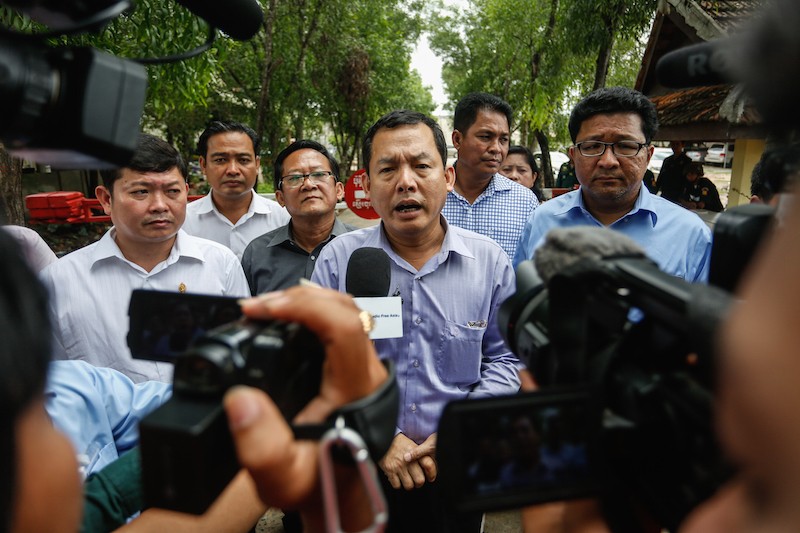
More than 20 CPP critics—many of them opposition officials and activists—have been jailed over the past year, and CNRP lawmaker Eng Chhay Eang and his group were hoping to meet all the opposition figures to check on their health and living situations.
They were allowed inside to meet with 15 party members and activists, spending more than an hour talking with them in a meeting room, but were not allowed to inspect their cells, Mr. Chhay Eang said.
They were also not allowed to see Senator Hong Sok Hour, lawmaker Um Sam An or Seang Chet, a commune councillor from Kompong Cham province, who are all still awaiting trial, with authorities issuing a letter saying that the visits could affect the judicial process.
“The detainees Hong Sok Hour, Um Sam An and Seang Chet are still under the procedures of court questioning, so permission should be sought from the court authorities,” said the letter, signed on Monday by Interior Ministry prison department chief Chan Kim Seng.
After leaving the prison, Mr. Chhay Eang said that the prisoners they did meet—including Meach Sovannara, a U.S. citizen suing the Cambodian government in a U.S. court for false imprisonment over his 20-year sentence for “insurrection”—were mostly in good health.
The opposition party would nevertheless send a request to the Interior Ministry to make a doctor available to its imprisoned members and to create a smoke-free area for them to live in, Mr. Chhay Eang said. He said the opposition figures had been separated from each other inside the prison.
“As we know, most of them are living in different places, and those already sentenced are staying with robbers and drug detainees,” he said.
He added that it was unreasonable for authorities to reject the CNRP’s request to meet with party officials whose trials are still ongoing, and that politics was likely at play.
“I don’t understand what the rule is, but we are only visiting them. Why is it so complicated?” he said.
Ly Sophanna, a municipal court spokesman, said the court would not have objected to the delegation visiting the prisoners but that decisions about granting access to prisoners were up to prison officials.
“To visit, they must have permission from the prison,” he said, adding that the court could only offer advice to prison officials on specific cases.
“A visit would not affect court procedures,” he added.
Nuth Savna, a spokesman for the Interior Ministry’s prisons department, could not be reached.