
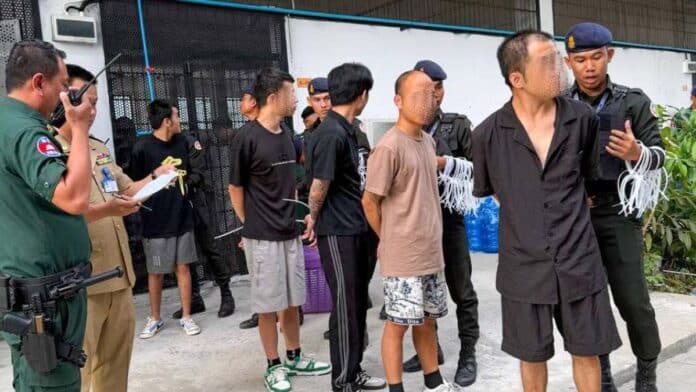
Human rights groups say online scam operations in Cambodia remain active, despite public pledges by senior Cambodian government officials to eliminate scam centres by April.
After those announcements, rights organisations continued to monitor the authorities’ crackdown on scam-related crime. They have issued two updates this year, one in January and another in early June.
In its latest report, released on June 8, Amnesty International said Cambodian authorities had failed to effectively address abuses inside scam compounds. The organisation said some officials appeared to cooperate with compound operators, while others ignored facilities even when they were nearby.
Amnesty International said foreign workers from Africa, Latin America, and Asia had been trafficked into Cambodia and forced to work in scam operations under conditions resembling modern slavery.
The group said Cambodian authorities appeared, in some cases, to treat trafficking victims as criminals rather than as people in need of protection.
It also reported that many scam compounds had not been permanently shut down, but had simply moved from one location to another.
Bloomberg and South Korea’s Seoul Economic Daily reported on June 9 that the number of scam compounds in Cambodia had increased during the crackdown period, rising from 53 to 86 sites, an increase of 62 percent.
On June 6, Thai authorities arrested a suspected ringleader linked to scam operations in Poipet, a Cambodian border city, after he allegedly fled to Bangkok.
According to Thailand’s The Nation newspaper, Thai immigration police arrested a 39 year old Japanese man wanted by authorities in Japan.
Investigators in Nagoya said a Japanese court had issued an arrest warrant for the man, who is accused of defrauding Japanese citizens of several billion yen.
Thai authorities are expected to extradite him to Japan following a formal request from Japanese officials.