
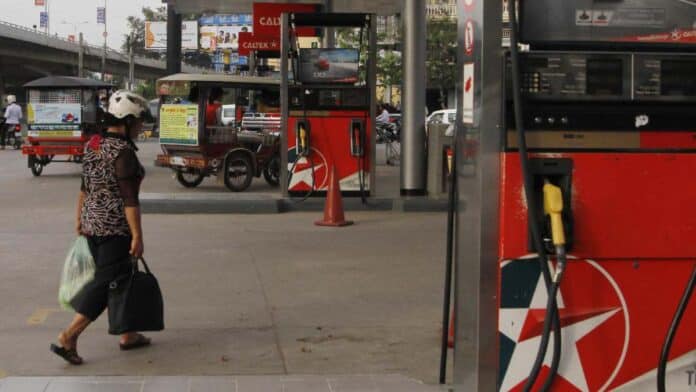
Opposition parties in Cambodia are calling on the government to temporarily suspend fuel import taxes, as rising prices place increasing pressure on household incomes.
In a statement issued on March 18, the New Generation Party urged authorities to take stronger measures to regulate fuel prices and prevent price manipulation. It also encouraged the promotion of alternative energy sources, including electricity and solar power, to reduce reliance on fossil fuels.
The party said recent days have seen fuel shortages and continued price increases, raising concerns among civil servants, armed forces, farmers, workers, and small business owners. It warned that higher fuel costs are having a broad impact on the economy and daily life.
According to the statement, shortages have disrupted business operations, including factories, transport companies, and small enterprises, forcing some to scale back or delay activities.
The Ministry of Commerce announced on March 16 that retail fuel prices would be set from March 17 at 5,500 riel per litre for regular petrol and 6,550 riel per litre for diesel. Major fuel retailers such as Total and Caltex have posted similar prices, with premium petrol reaching 6,600 riel per litre.
Separately, the National Power Party said in a statement on March 17 that rising fuel prices are significantly affecting living standards. It called for fuel taxes to be reduced to zero, along with a cut in value-added tax from 10 percent to zero. The party said such measures could bring fuel prices down to between 4,000 and 5,000 riel per litre.
Both parties said the current price increases are placing a heavy burden on farmers, workers, and low-income households, and urged the government to consider financial measures to stabilise fuel costs.
However, Minister of Mines and Energy Keo Rottanak said on March 16 that Cambodia is not facing a fuel shortage. He said the country maintains strategic reserves sufficient for around 21 days, meaning supplies would remain stable even if imports were temporarily disrupted.