
The Cambodian government has announced a nationwide campaign to crack down on online scams, marking the latest effort to combat cybercrime. But civil society observers say the move may be aimed more at appeasing international criticism than addressing the roots of the problem.
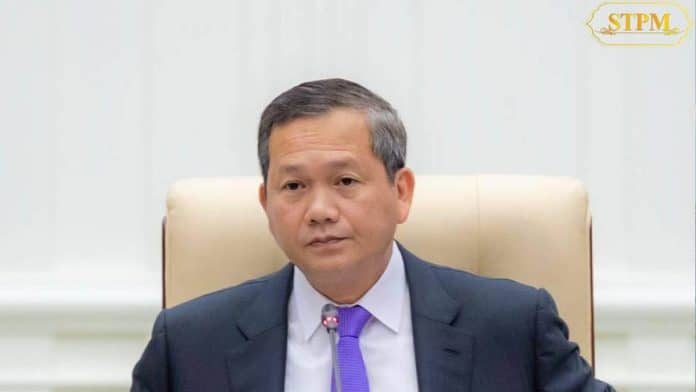
On July 10, Prime Minister Hun Manet signed a directive targeting online fraud. The government has ordered provincial governors, the Ministry of Interior, the National Police, and other relevant ministries to coordinate efforts to eliminate internet scams across the country. Those who fail to implement the directive risk dismissal or reassignment.
However, social commentator Vorn Chanlout expressed skepticism, warning that similar crackdowns in the past have coincided with increased international pressure. Writing on Facebook, he said these campaigns often serve to shield high-level figures allegedly involved in the crimes.
He cited well-known figures such as Ly Yong Phat and Kok An, both members of the Senate and linked to the ruling Cambodian People’s Party, as well as Hun To, a nephew of former Prime Minister Hun Sen and a cousin of Hun Manet. All three have been named in foreign investigations or media reports as having ties to transnational criminal networks. Despite this, they continue to hold influence and move freely within Cambodia.
Vorn Chanlout claimed these and other business elites, known locally as oknha, are implicated in a range of illegal activities, including cyber scams, human trafficking, and money laundering. He argued that any genuine effort to root out crime must begin at the top and be consistent, not simply reactionary.
In late June, Amnesty International released a 250-page investigative report on cyber scam operations in Cambodia. The report, based on 18 months of research and interviews with 58 survivors including 9 children, details widespread human trafficking and forced labor linked to online fraud rings. Much of the activity is said to be centered in Preah Sihanouk province, which has drawn international attention for its so-called “pig butchering” scam compounds.
The Cambodian government has acknowledged that online fraud poses a growing threat to global and regional security. Officials say the new directive is a step toward stopping foreign criminal groups from using Cambodia as a base for illegal operations.
But critics say the government is failing to take meaningful action against individuals with known ties to the ruling elite. Kok An, a longtime ally of Hun Sen, was recently the subject of an arrest warrant issued by a Thai court in connection with online fraud and money laundering. While Thai authorities have taken legal steps, the Cambodian government has yet to announce any investigation into the case.
The ruling Cambodian People’s Party has dismissed Thailand’s action against Kok An as an attempt to smear Cambodia’s reputation. Amnesty and other rights groups, however, argue that the international community has ample reason for concern.
Despite ongoing denials, Cambodia has now banned the import of 11 categories of goods from Thailand, including gasoline, diesel, natural gas, electricity, internet services, and even Thai films and boxers. The bans follow growing tensions over border issues and further raise questions about the government’s motivations and capacity for reform.
As the crackdown unfolds, questions remain about how far the Cambodian government is willing to go and whether those at the top will be held to account.